---
sidebar_label: "Authentication Flows"
---
export const metadata = {
title: `Authentication Flows with the Auth Provider`,
}
# {metadata.title}
In this document, you'll learn about how the Auth Provider is used in an authentication flow.
## How to Authenticate a User
To authenticate a user, you use the `authenticate` method of the Auth Module's main service (`IAuthModuleService`). For example:
```ts
const data = await authModuleService.authenticate(
"emailpass",
// passed to auth provider
{
// ...
}
)
```
This method calls the `authenticate` method of the specified provider and returns its data.
Learn about the parameters and return type of the `IAuthModuleService`'s `authenticate` method in [this reference](/references/auth/authenticate).
---
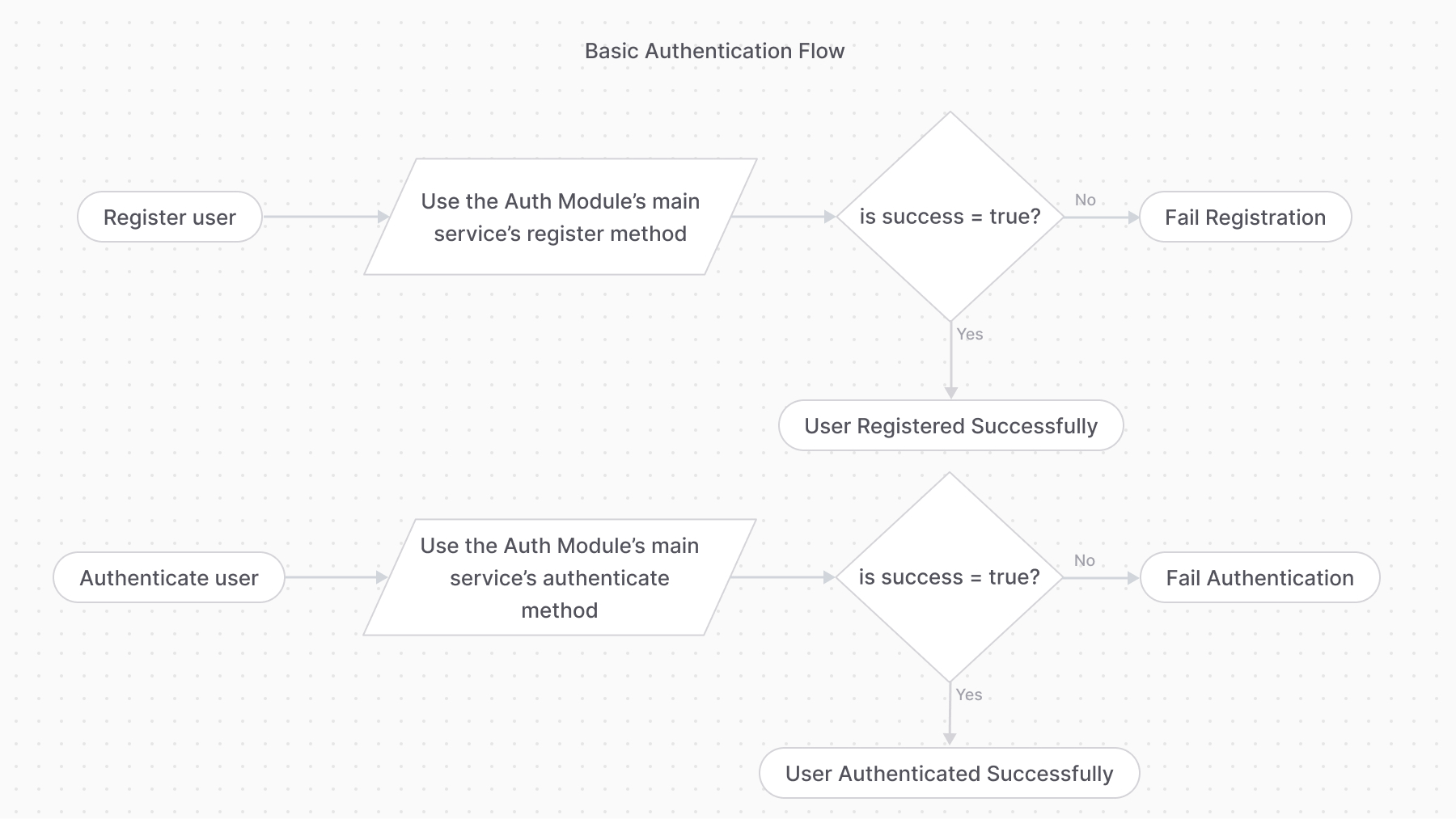
## Basic Authentication Flow
If the `authenticate` method returns the following object:
```ts
data = {
success: true,
authUser: {
// ...
},
}
```
Then, the user is authenticated successfully, and their authentication details are available within the `authUser` object.
Learn more about the `authUser` in [this guide](../persisting-auth-user/page.mdx#what-is-an-authuser).
---
## Authentication with Third-Party Service Flow
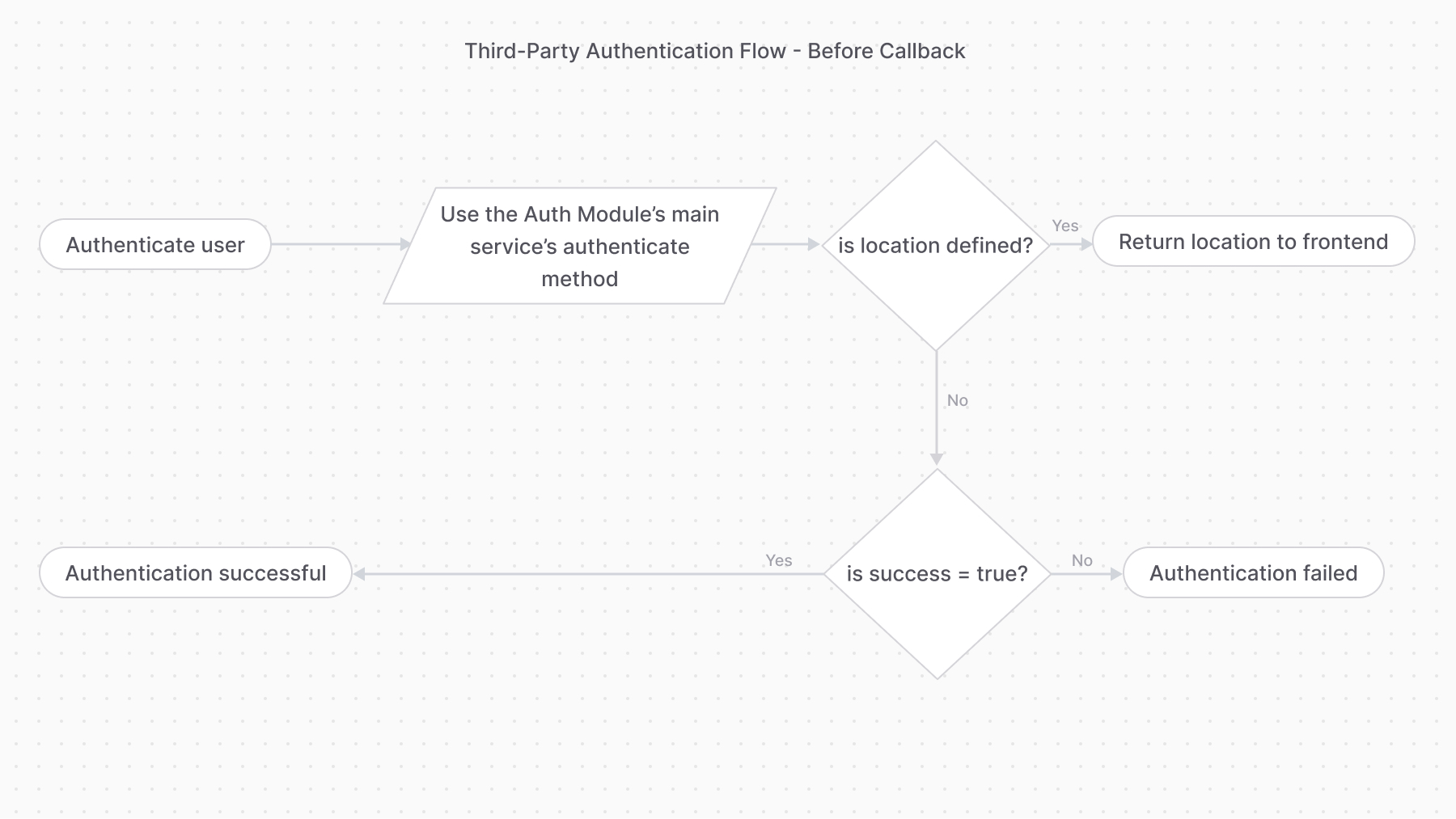
If the `authenticate` method returns the following object:
```ts
data = {
success: true,
location: "https://....",
}
```
It means the authentication process requires the user to perform an action with a third-party service. For example, when using the `google` provider, the user goes to the URL specified in the `location`'s value to log in with their Google account.
### validateCallback
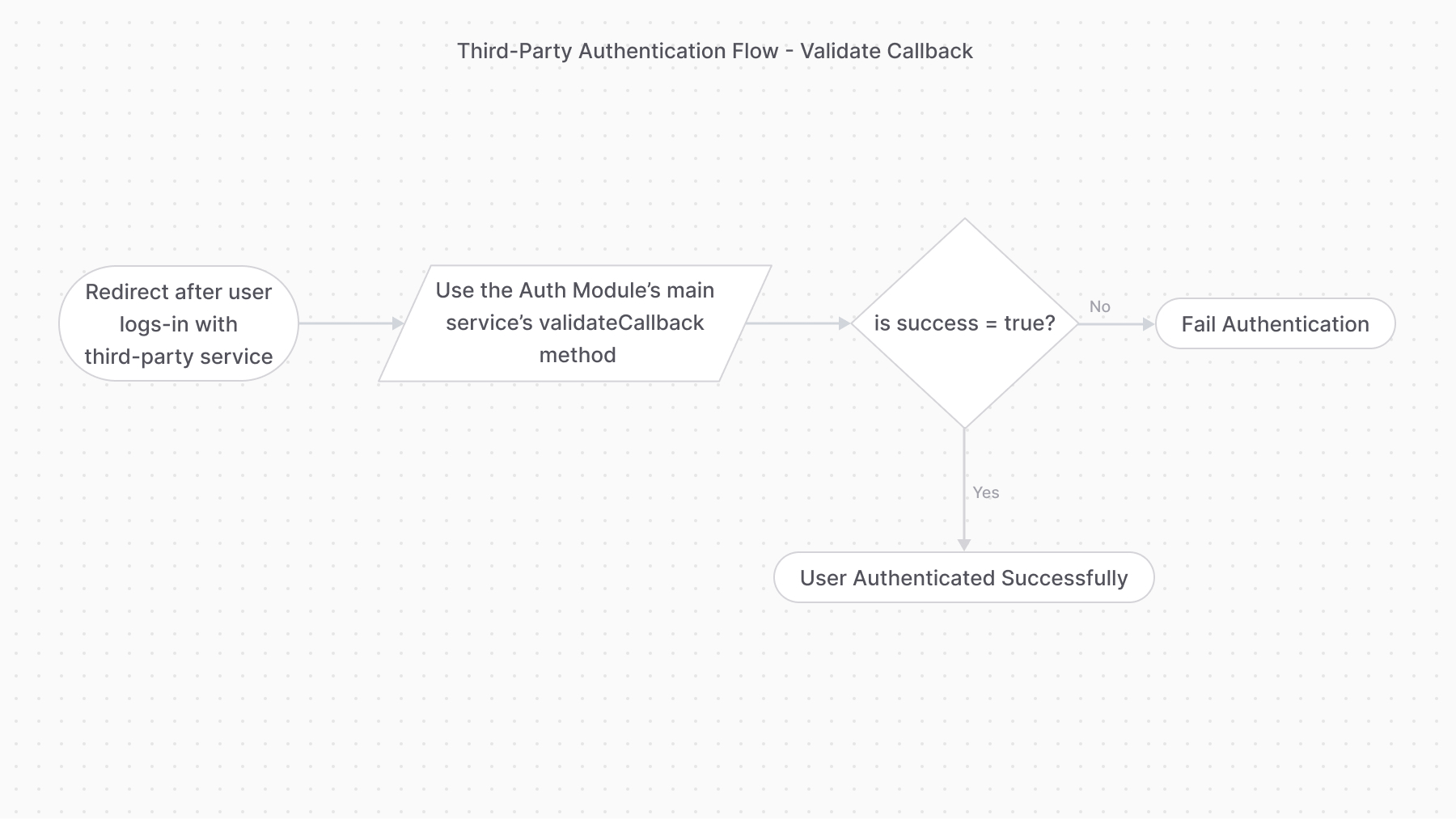
Providers handling this authentication flow must implement the `validateCallback` method. It implements the logic to validate the authentication with the third-party service.
So, once the user performs the required action, the third-party service must redirect to an API route that uses the `validateCallback` method of the `IAuthModuleService`. The method calls the specified provider’s `validateCallback` method passing it the authentication details it received in the second parameter:
```ts
const data = await authModuleService.validateCallback(
"google",
// passed to auth provider
{
// ...
}
)
```
Learn more about the parameters and return type of the `IAuthModuleService`'s `validateCallback` method in [this reference](/references/auth/validateCallback).
If the authentication is successful, the auth provider’s `validateCallback` method returns the same data as the basic authentication:
```ts
data = {
success: true,
authUser: {
// ...
},
}
```