 Shahed Nasser
d510639193
Shahed Nasser
d510639193
* added draft order plugin docs

* fix vale error

* added note about draft order being optional

* add new shipping option - shipping method link

* update user guides

* generate

* fix github icon

* changes to shipping option type

* document logger

* reorder list

* fixes

* fixes
80 lines
4.2 KiB
Plaintext
80 lines
4.2 KiB
Plaintext
export const metadata = {
|
||
title: `Shipping Option`,
|
||
}
|
||
|
||
# {metadata.title}
|
||
|
||
In this document, you’ll learn about shipping options and their rules.
|
||
|
||
## What is a Shipping Option?
|
||
|
||
A shipping option is a way of shipping an item. Each fulfillment provider offers a set of shipping options. For example, a provider may offer a shipping option for express shipping and another for standard shipping.
|
||
|
||
When the customer places an order, they choose a shipping option to fulfill their items.
|
||
|
||
A shipping option is represented by the [ShippingOption data model](/references/fulfillment/models/ShippingOption).
|
||
|
||
---
|
||
|
||
## Service Zone Restrictions
|
||
|
||
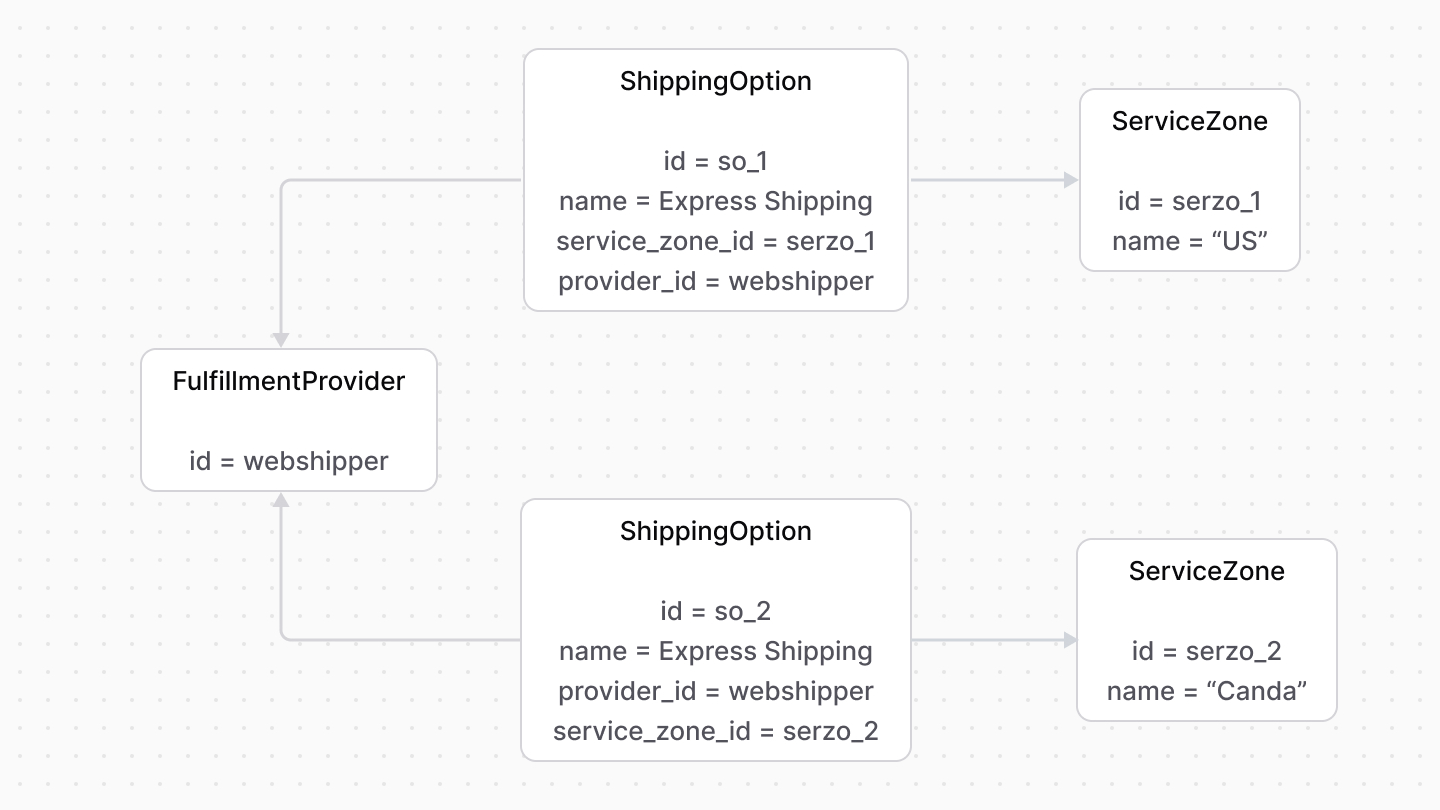
A shipping option is restricted by a service zone, which limits the locations where the shipping option can be used.
|
||
|
||
For example, a fulfillment provider may have a shipping option that can be used in the United States and another in Canada.
|
||
|
||
|
||
|
||
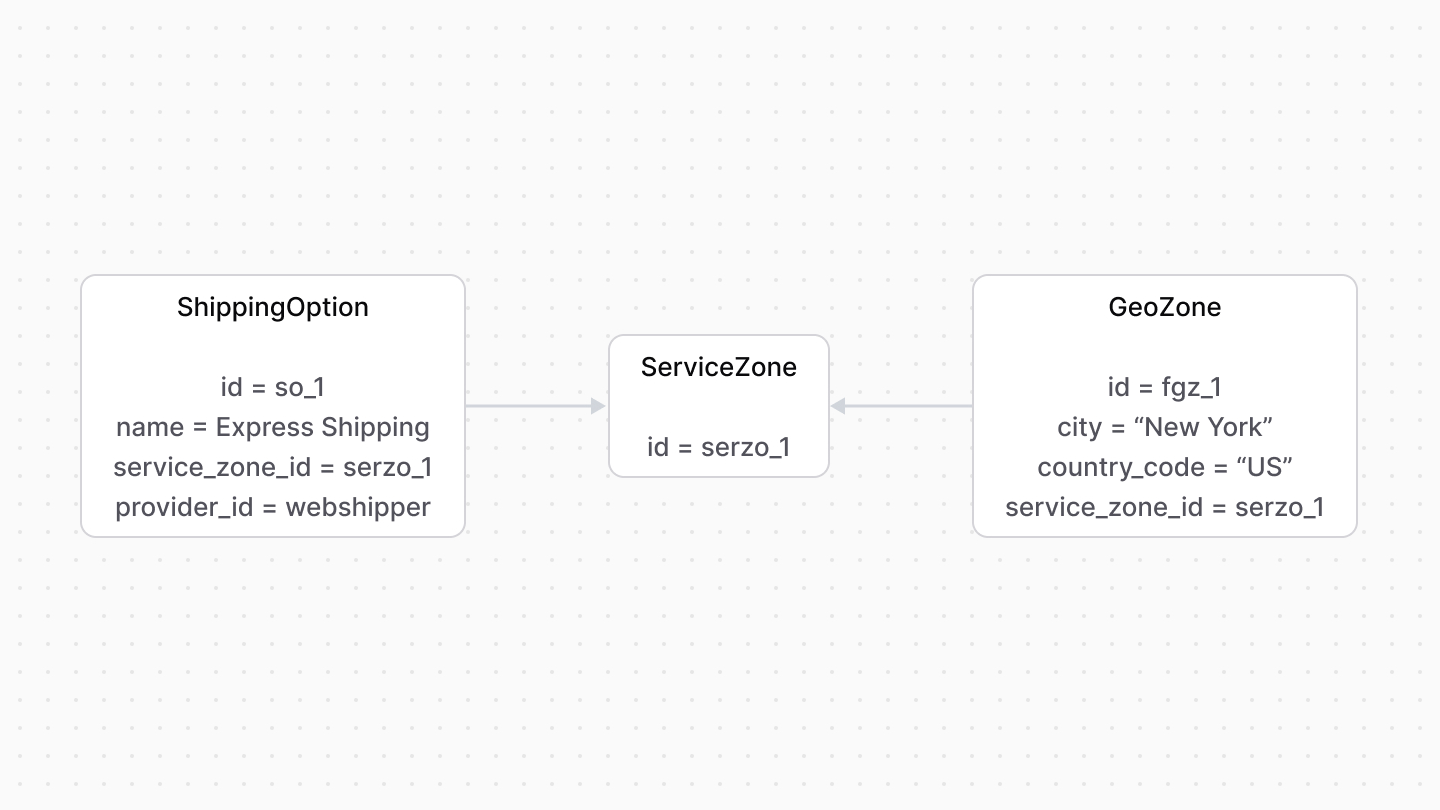
Service zones can be more restrictive, such as limiting to certain cities or province codes.
|
||
|
||
<Note title="Tip">
|
||
|
||
The province code is always in lowercase and in [ISO 3166-2 format](https://en.wikipedia.org/wiki/ISO_3166-2).
|
||
|
||
</Note>
|
||
|
||
|
||
|
||
---
|
||
|
||
## Shipping Option Rules
|
||
|
||
You can restrict shipping options by custom rules, such as the item’s weight or the customer group.
|
||
|
||
<Note title="Tip">
|
||
|
||
You can also restrict a shipping option's price based on specific conditions. For example, you can make a shipping option's price free based on the cart total. Learn more in the Pricing Module's [Price Rules](../../pricing/price-rules/page.mdx#how-to-set-rules-on-a-price) guide.
|
||
|
||
</Note>
|
||
|
||
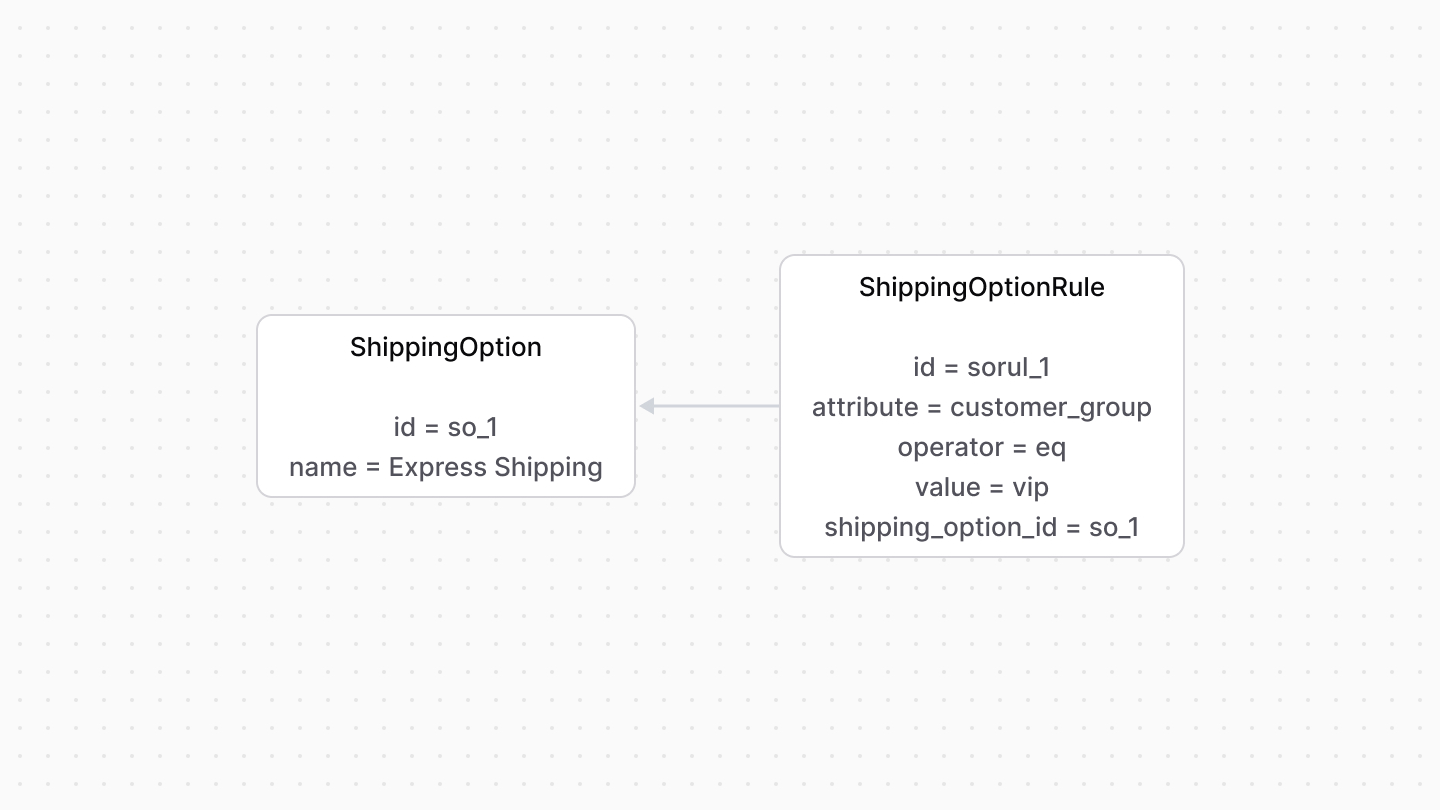
These rules are represented by the [ShippingOptionRule data model](/references/fulfillment/models/ShippingOptionRule). Its properties define the custom rules:
|
||
|
||
- `attribute`: The name of a property or table that the rule applies to. For example, `customer_group`.
|
||
- `operator`: The operator used in the condition. For example:
|
||
- To allow multiple values, use the operator `in`, which validates that the provided values are in the rule’s values.
|
||
- To create a negation condition that considers `value` against the rule, use `nin`, which validates that the provided values aren’t in the rule’s values.
|
||
- `value`: One or more values.
|
||
|
||
|
||
|
||
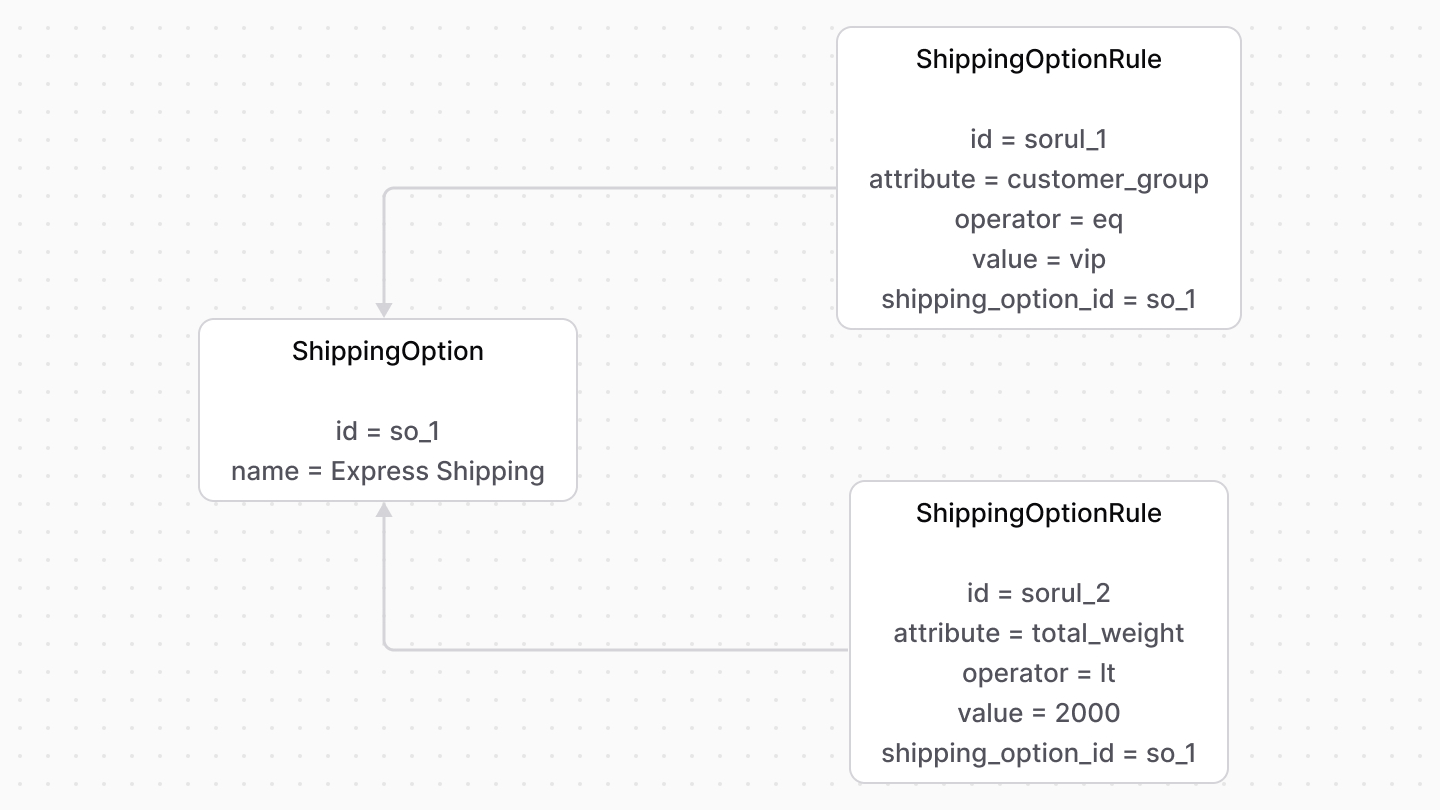
A shipping option can have multiple rules. For example, you can add rules to a shipping option so that it's available if the customer belongs to the VIP group and the total weight is less than 2000g.
|
||
|
||
|
||
|
||
---
|
||
|
||
## Shipping Profiles and Types
|
||
|
||
A shipping option belongs to a type and a profile.
|
||
|
||
A shipping option type defines a group of shipping options with shared shipping characteristics. For example, a shipping option’s type may be `express`, while another may be `standard`. The type is represented by the [ShippingOptionType data model](/references/fulfillment/models/ShippingOptionType).
|
||
|
||
A shipping profile defines a group of items (such as products) that are shipped in a similar manner. For example, the "Standard" shipping profile applies to all products, whereas the "Digital" shipping profile applies to digital products. Shipping profiles are represented by the [ShippingProfile data model](/references/fulfillment/models/ShippingProfile).
|
||
|
||
---
|
||
|
||
## data Property
|
||
|
||
When fulfilling an item, you might use a third-party fulfillment provider that requires additional custom data to be passed along from the checkout or order creation process.
|
||
|
||
The `ShippingOption` data model has a `data` property. It's an object that stores custom data relevant for creating and processing a fulfillment later.
|