 26e2f81c24
* fix: nextjs starter meta title

* fix: adjust

---------

Co-authored-by: Shahed Nasser <shahednasser@gmail.com>
298 lines
11 KiB
Plaintext
298 lines
11 KiB
Plaintext
---
|
||
title: 'Get started with Next.js for e-commerce'
|
||
description: 'Learn how to get started with a Next.js storefront and Medusa. The Next.js Starter includes ready-integrations with plugins like Stripe and Algolia. It offers features like customer accounts, cart and checkout flows, and more.'
|
||
---
|
||
|
||
import Feedback from '@site/src/components/Feedback';
|
||
import QueryNote from '@site/src/components/QueryNote';
|
||
import Troubleshooting from '@site/src/components/Troubleshooting'
|
||
import ModuleXErrorSection from '../troubleshooting/common-installation-errors/_module-x-error.mdx'
|
||
import CorsErrorSection from '../troubleshooting/cors-issues.md'
|
||
|
||
# Next.js Quickstart
|
||
|
||
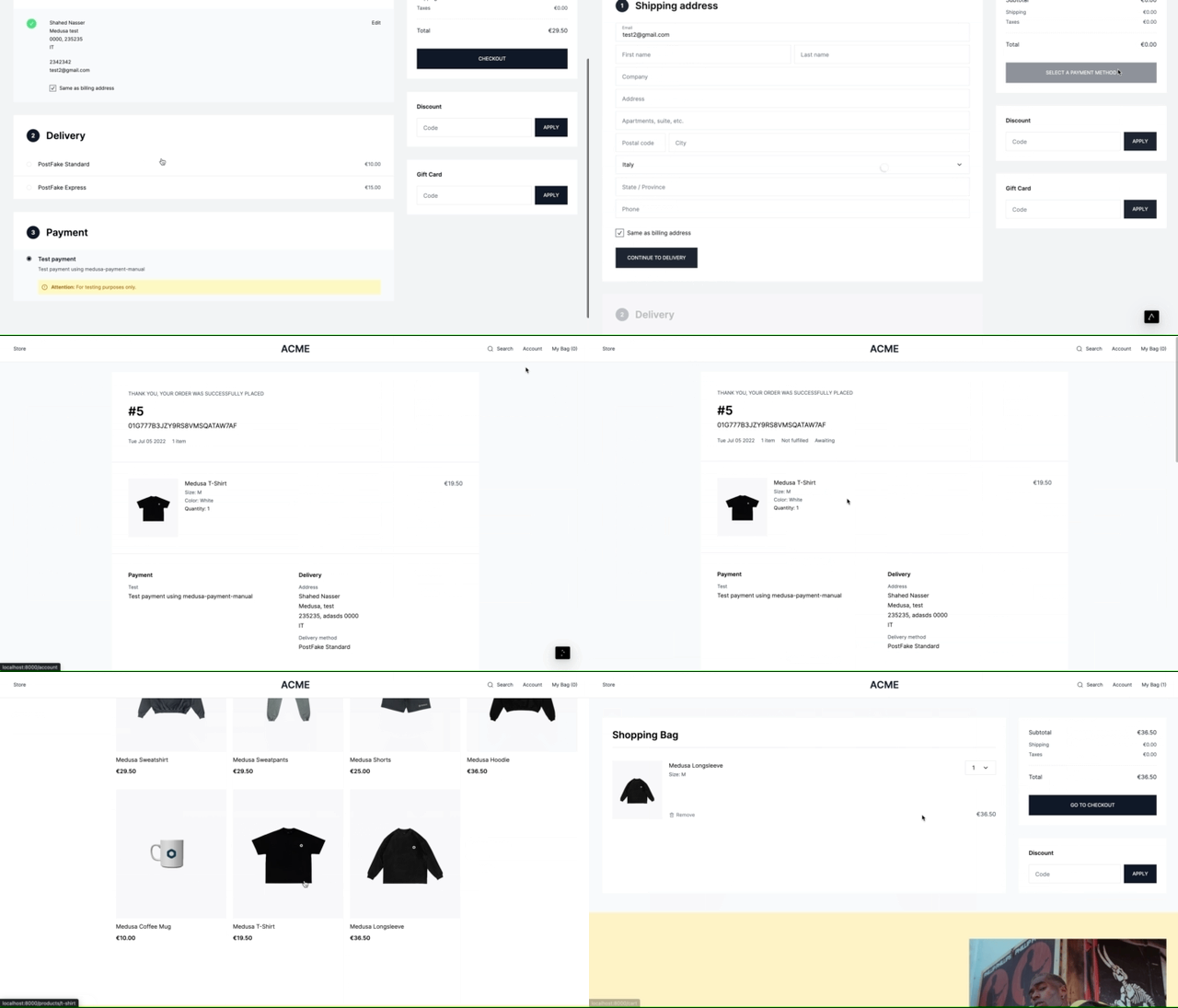
This document guides you to install and set up the Next.js Starter Template.
|
||
|
||
<!-- vale docs.We = NO -->
|
||
|
||
<QueryNote
|
||
query={{
|
||
key: 'ref',
|
||
value: 'gatsby-medusa-starter'
|
||
}}
|
||
admonition={{
|
||
type: 'note'
|
||
}}
|
||
>
|
||
We've deprecated the Gatsby starter storefront and instead recommend using the Next.js Starter Template or [building your own custom storefront](../storefront/roadmap.mdx).
|
||
</QueryNote>
|
||
|
||
<!-- vale docs.We = YES -->
|
||
|
||
|
||
|
||
## Instant Deployment to Vercel
|
||
|
||
Instead of manually following this guide to install then later deploy the Next.js Starter Template, you can deploy the Next.js Starter Template to Vercel with this button:
|
||
|
||
<a
|
||
href="https://vercel.com/new/clone?repository-url=https%3A%2F%2Fgithub.com%2Fmedusajs%2Fnextjs-starter-medusa.git&env=NEXT_PUBLIC_MEDUSA_BACKEND_URL&envDescription=URL%20of%20your%20Medusa%20Backend" class="img-url no-zoom-img">
|
||
<img src="https://vercel.com/button" alt="Deploy with Vercel" class="no-zoom-img"/>
|
||
</a>
|
||
|
||
---
|
||
|
||
## Prerequisites
|
||
|
||
This document assumes you already have a Medusa backend installed. If you don’t, you can install the Medusa backend with the following command:
|
||
|
||
```bash
|
||
npx create-medusa-app@latest
|
||
```
|
||
|
||
Learn more about prerequisites of `create-medusa-app` and troubleshooting in [this guide](../create-medusa-app.mdx).
|
||
|
||
You should also have Node.js with v16 or greater installed. You can check your Node.js version with the following command:
|
||
|
||
```bash noReport
|
||
node -v
|
||
```
|
||
|
||
You can install Node from the [official website](https://nodejs.org/en/).
|
||
|
||
---
|
||
|
||
## Installation
|
||
|
||
1\. Create a new Next.js project using the [Medusa starter template](https://github.com/medusajs/nextjs-starter-medusa):
|
||
|
||
```bash
|
||
npx create-next-app -e https://github.com/medusajs/nextjs-starter-medusa my-medusa-storefront
|
||
```
|
||
|
||
2\. Change to the newly created directory `my-medusa-storefront` and rename the template environment variable file to use environment variables in development:
|
||
|
||
```bash
|
||
cd my-medusa-storefront
|
||
mv .env.template .env.local
|
||
```
|
||
|
||
3\. Make sure the Medusa backend is running, then run the local Next.js server:
|
||
|
||
```bash npm2yarn
|
||
npm run dev
|
||
```
|
||
|
||
Your Next.js Starter Template is now running at `localhost:8000`
|
||
|
||
<Feedback
|
||
event="survey_nextjs_quickstart"
|
||
question="Did you set up the storefront successfully?"
|
||
positiveQuestion="Is there anything that should improved?"
|
||
negativeQuestion="Please describe the issue you faced."
|
||
/>
|
||
|
||
---
|
||
|
||
## Troubleshooting Installation
|
||
|
||
<Troubleshooting
|
||
sections={[
|
||
{
|
||
title: 'CORS Error',
|
||
content: <CorsErrorSection />
|
||
},
|
||
{
|
||
title: 'Resolve "Cannot find module X" Errors',
|
||
content: <ModuleXErrorSection />
|
||
},
|
||
]}
|
||
/>
|
||
|
||
---
|
||
|
||
## Development Notes
|
||
|
||
### Toggle Search Engine Feature
|
||
|
||
The Next.js Starter Template by default is compatible with MeiliSearch.
|
||
|
||
To enable or disable the search engine, change the value of the feature in `store.config.json`:
|
||
|
||
```json
|
||
{
|
||
"features": {
|
||
"search": false
|
||
}
|
||
}
|
||
```
|
||
|
||
Then, restart your Next.js backend. Depending on whether you enabled or disabled the search engine, the search bar will appear or disappear in the navigation bar accordingly.
|
||
|
||
### MeiliSearch Integration
|
||
|
||
If you have the search engine feature enabled, it is expected that you have installed the MeiliSearch plugin on your Medusa backend. If not, [follow this guide to install it](../plugins/search/meilisearch.md).
|
||
|
||
In your Next.js Starter Template, set the environment variables necessary for the MeiliSearch integration:
|
||
|
||
```json
|
||
NEXT_PUBLIC_SEARCH_ENDPOINT=<YOUR_MEILISEARCH_URL>
|
||
NEXT_PUBLIC_SEARCH_API_KEY=<YOUR_API_KEY>
|
||
NEXT_PUBLIC_SEARCH_INDEX_NAME=products
|
||
```
|
||
|
||
`<YOUR_MEILISEARCH_URL>` is the URL MeiliSearch is running on. The default is `http://127.0.0.1:7700`.
|
||
|
||
`NEXT_PUBLIC_SEARCH_INDEX_NAME` is the index name of the products in MeiliSearch. By default, it’s `products`.
|
||
|
||
`<YOUR_API_KEY>` is the API key used to search through MeiliSearch indexes. To create a new API Key, make sure that the MeiliSearch service is running and send the following request:
|
||
|
||
```bash
|
||
curl \
|
||
-X POST '<MEILISEARCH_URL>/keys' \
|
||
-H 'Content-Type: application/json' \
|
||
-H 'Authorization: Bearer <MEILISEARCH_MASTER_KEY>' \
|
||
--data-binary '{
|
||
"description": "Search products",
|
||
"actions": ["search"],
|
||
"indexes": ["products"],
|
||
"expiresAt": "2024-01-01T00:00:00Z"
|
||
}'
|
||
```
|
||
|
||
Make sure to replace `<MEILISEARCH_URL>` with the URL MeiliSearch is running on and `<MEILISEARCH_MASTER_KEY>` with your MeiliSearch [master key](https://docs.meilisearch.com/learn/security/master_api_keys.html#protecting-a-meilisearch-instance).
|
||
|
||
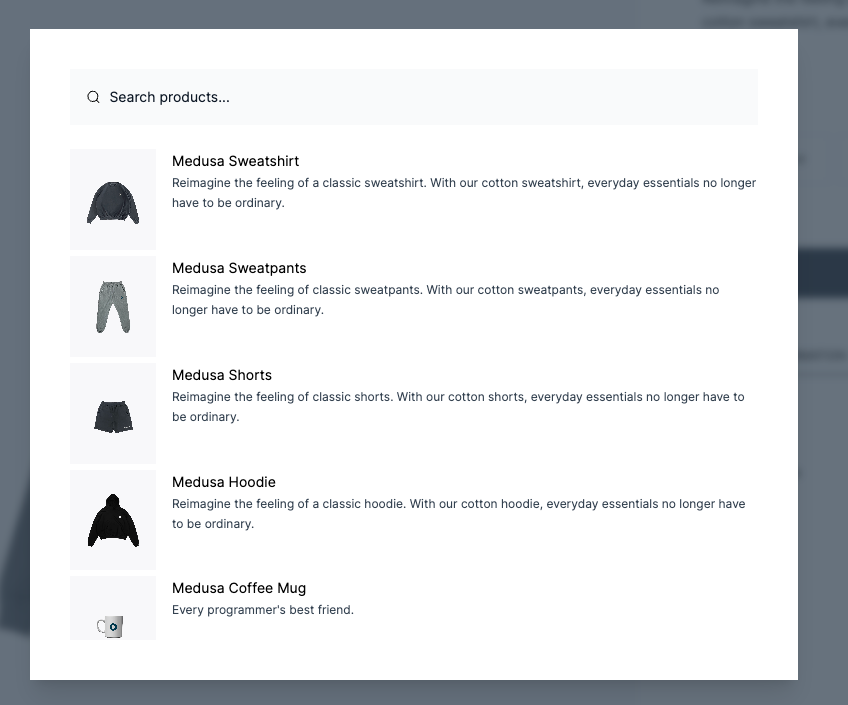
Then, restart the Next.js backend. You’ll be able to search through available products by clicking the search icon in the navigation bar.
|
||
|
||
:::note
|
||
|
||
To make sure the Next.js Starter Template properly displays the products in the search result, include in the `displayedAttributes` setting of the MeiliSearch plugin on the Medusa backend at least the fields `title`, `handle`, `description`, and `thumbnail`.
|
||
|
||
:::
|
||
|
||
|
||
|
||
### Algolia Integration
|
||
|
||
Instead of using the default MeiliSearch search engine, you can switch to using Algolia. Make sure you start by installing the Algolia plugin on your Medusa backend. You can do it by [following this guide](../plugins/search/algolia.md).
|
||
|
||
In your Next.js Starter Template, set the environment variables necessary for the Algolia integration:
|
||
|
||
```bash
|
||
NEXT_PUBLIC_SEARCH_APP_ID=<YOUR_APP_ID>
|
||
NEXT_PUBLIC_SEARCH_API_KEY=<YOUR_SEARCH_API_KEY>
|
||
NEXT_PUBLIC_SEARCH_INDEX_NAME=products
|
||
```
|
||
|
||
Where `<YOUR_APP_ID>` and `<YOUR_SEARCH_API_KEY>` are the Algolia App ID and Algolia Search API Key respectively. You can retrieve them from Algolia by going to [API Keys](https://www.algolia.com/account/api-keys/all) in your account settings.
|
||
|
||
`NEXT_PUBLIC_SEARCH_INDEX_NAME` is the index name of the products in Algolia. By default, it’s `products`.
|
||
|
||
Next, change the content of `src/lib/search-client.ts` to the following:
|
||
|
||
```bash
|
||
import algoliasearch from "algoliasearch/lite"
|
||
|
||
const appId = process.env.NEXT_PUBLIC_SEARCH_APP_ID || "" // You should add this to your environment variables
|
||
|
||
const apiKey = process.env.NEXT_PUBLIC_SEARCH_API_KEY || "test_key"
|
||
|
||
export const searchClient = algoliasearch(appId, apiKey)
|
||
|
||
export const SEARCH_INDEX_NAME =
|
||
process.env.NEXT_PUBLIC_INDEX_NAME || "products"
|
||
```
|
||
|
||
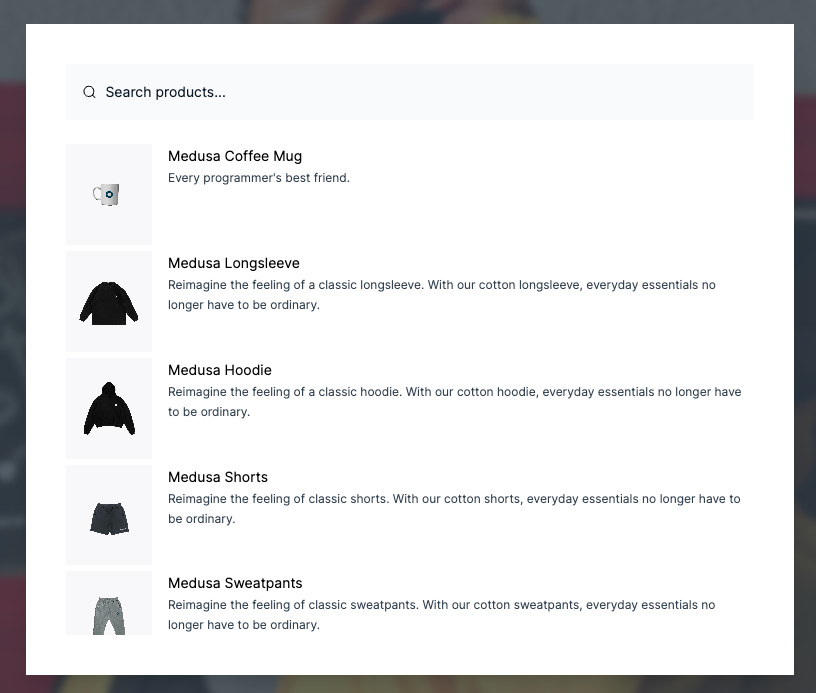
Then, restart the Next.js backend. You’ll be able to search through available products by clicking the search icon in the navigation bar.
|
||
|
||
|
||
|
||
### Stripe Payment Integration
|
||
|
||
Stripe integration is supported by default. Make sure you have Stripe installed and enabled on your Medusa backend first. You can [follow this guide to learn how to install it](../plugins/payment/stripe.mdx).
|
||
|
||
Then, in your Next.js Starter Template, set the environment variable necessary for the Stripe integration:
|
||
|
||
```bash
|
||
NEXT_PUBLIC_STRIPE_KEY=<YOUR_PUBLISHABLE_KEY>
|
||
```
|
||
|
||
Make sure to replace `<YOUR_PUBLISHABLE_KEY>` with your Stripe publishable key. It can be retrieved from your [Stripe dashboard](https://dashboard.stripe.com/) by going to Developers → API Keys.
|
||
|
||
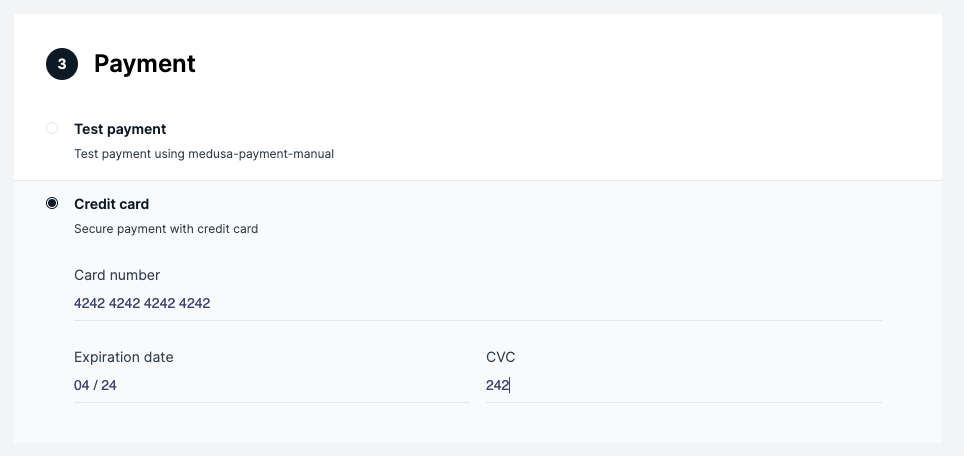
If you restart your Next.js backend you should be able to pay with Stripe on checkout.
|
||
|
||
|
||
|
||
### PayPal Payment Integration
|
||
|
||
PayPal integration is supported by default. Make sure you have PayPal installed and enabled on your Medusa backend first. You can [follow this guide to learn how to install it](../plugins/payment/paypal.md).
|
||
|
||
Then, in your Next.js Starter Template, set the environment variable necessary for the PayPal integration:
|
||
|
||
```bash
|
||
NEXT_PUBLIC_PAYPAL_CLIENT_ID=<YOUR_CLIENT_ID>
|
||
```
|
||
|
||
Make sure to replace `<YOUR_CLIENT_ID>` with your PayPal client ID. You can retrieve it from the [PayPal developer dashboard](https://developer.paypal.com/developer/applications/).
|
||
|
||
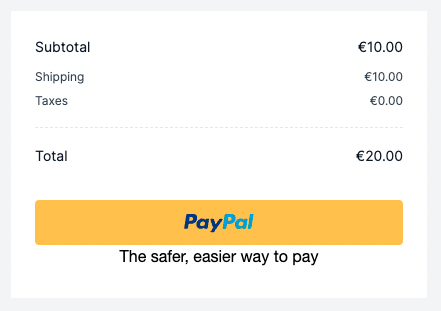
If you restart your Next.js backend you should be able to pay with PayPal on checkout.
|
||
|
||
|
||
|
||
### Customization
|
||
|
||
To customize the pages of the storefront, you can customize the files under the `src/pages` directory.
|
||
|
||
To customize the components used in the storefront, you can customize the files under the `src/modules` directory.
|
||
|
||
To customize the styles of the storefront, you can customize the `src/styles` directory.
|
||
|
||
### Change Port
|
||
|
||
By default, the Next.js Starter Template runs on port `8000`.
|
||
|
||
To change the port, change the `develop` command in `package.json` to the following:
|
||
|
||
```json
|
||
"scripts": {
|
||
//other scripts
|
||
"dev": "next dev -p <PORT>"
|
||
}
|
||
```
|
||
|
||
Make sure to replace `<PORT>` with the port number you want the storefront to run on. For example, `3000`.
|
||
|
||
Then, on your backend, update the environment variable `STORE_CORS` to the URL with the new port:
|
||
|
||
```bash
|
||
STORE_CORS=http://localhost:<PORT>
|
||
```
|
||
|
||
### Development Resources
|
||
|
||
You can learn more about development with Next.js through [their documentation](https://nextjs.org/docs/getting-started).
|
||
|
||
---
|
||
|
||
## Storefront Features
|
||
|
||
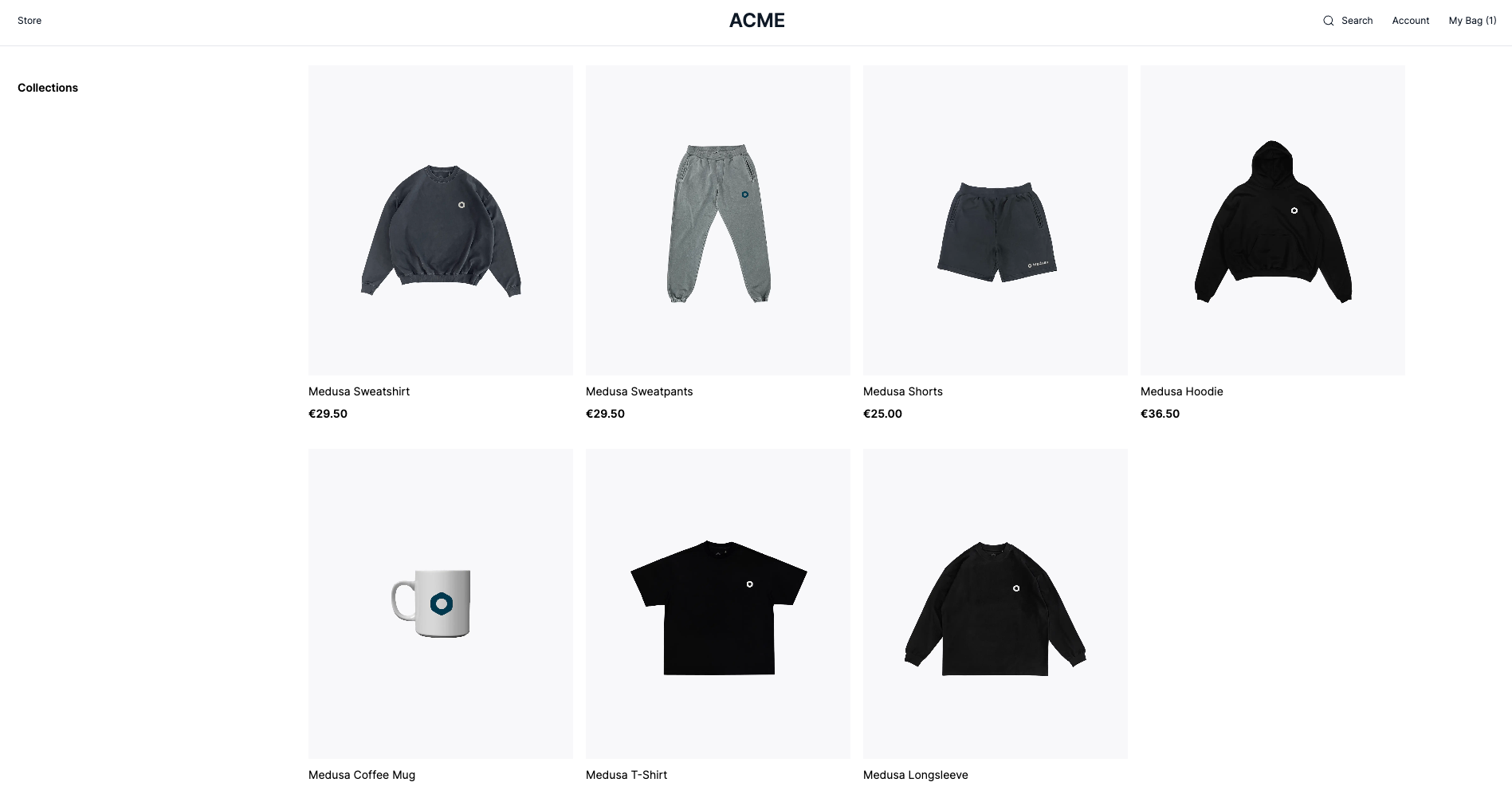
- View all products and manage your cart.
|
||
|
||
|
||
|
||
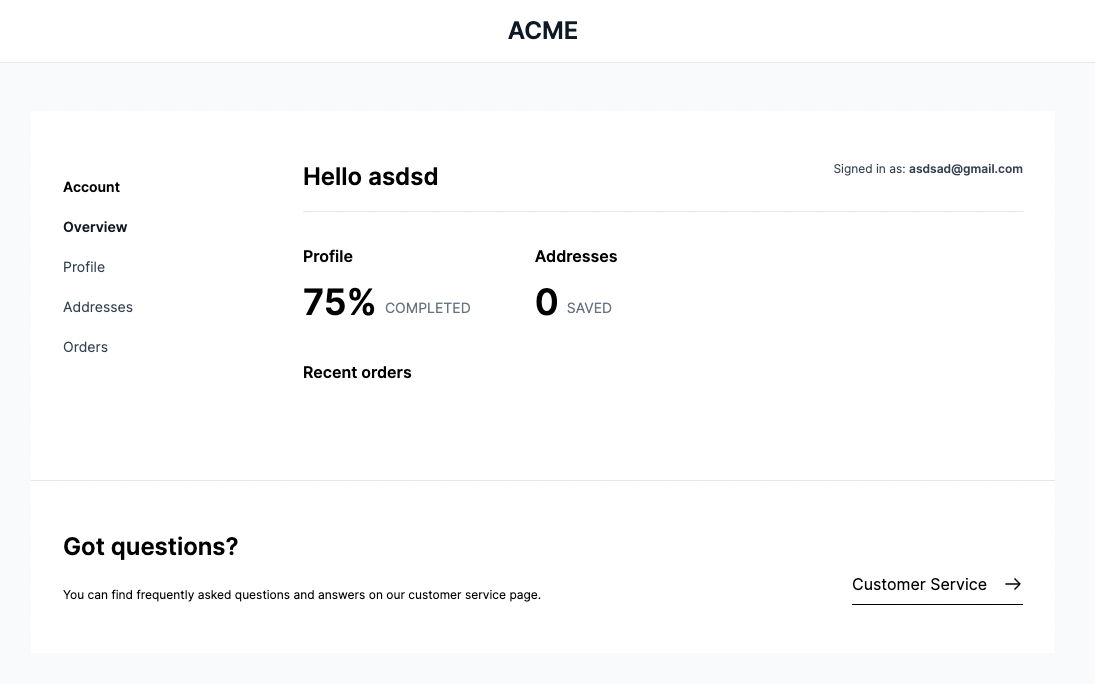
- Customer authentication and profiles.
|
||
|
||
|
||
|
||
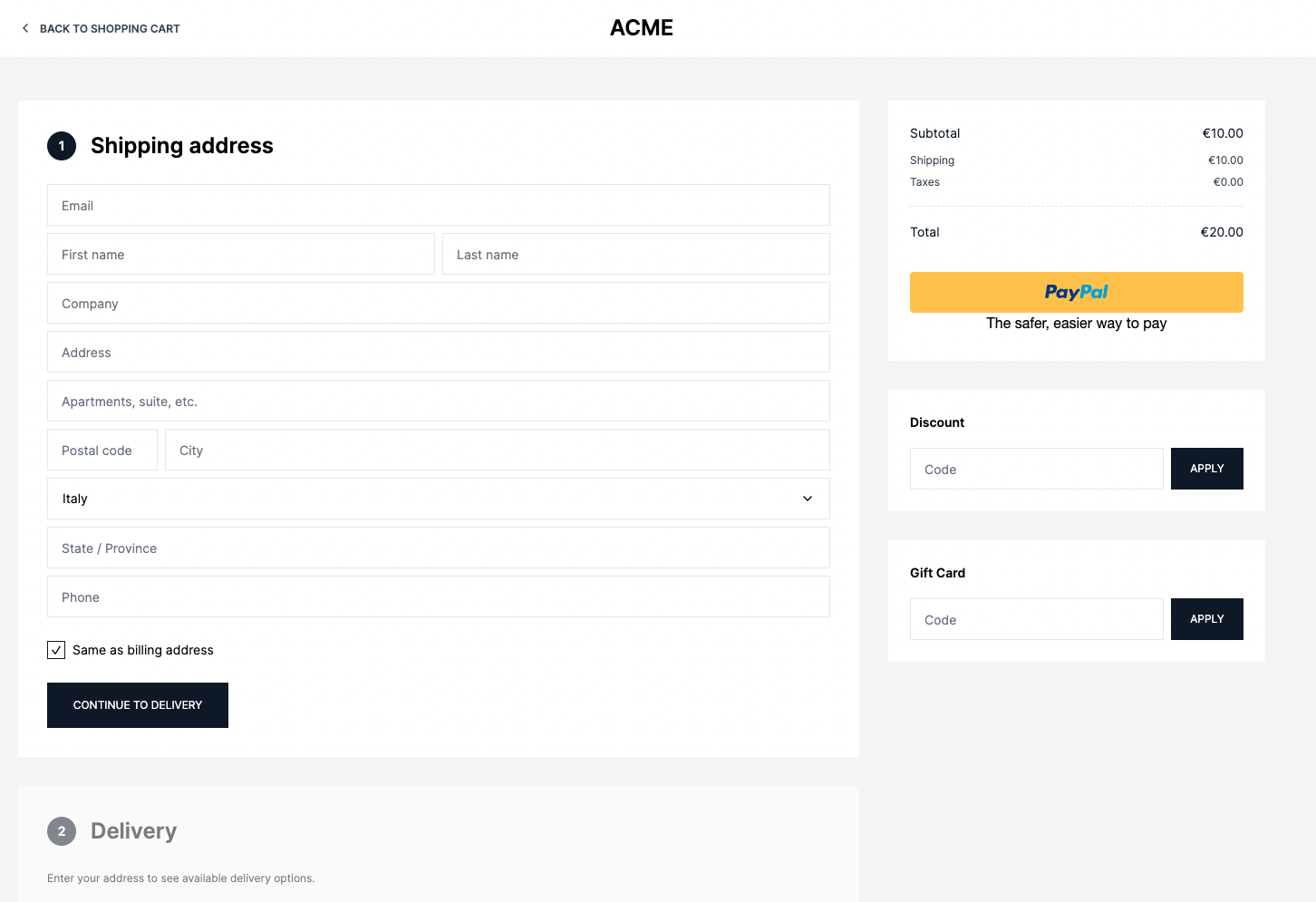
- Full checkout workflow.
|
||
|
||
|
||
|
||
---
|
||
|
||
## See Also
|
||
|
||
- [Storefront API reference](https://docs.medusajs.com/api/store)
|
||
- [Install Medusa Admin](../admin/quickstart.mdx).
|
||
- [Install Stripe as a payment processor](../plugins/payment/stripe.mdx#add-to-nextjs-storefront)
|