
76 lines
4.0 KiB
Plaintext
76 lines
4.0 KiB
Plaintext
export const metadata = {
|
||
title: `Pricing Concepts`,
|
||
}
|
||
|
||
# {metadata.title}
|
||
|
||
In this document, you’ll learn about the main concepts in the Pricing Module, and how data is stored and related.
|
||
|
||
## Price
|
||
|
||
The `Price` data model represents any price.
|
||
|
||
Prices can be conditioned by the `min_quantity` and `max_quantity` fields, which are helpful when calculating the price for a specific quantity.
|
||
|
||
If a price has its `min_quantity` or `max_quantity` fields set, they’re only considered for the price calculation if they have a lower `min_quantity` or a higher `max_quantity` than the quantity specified for calculation.
|
||
|
||
---
|
||
|
||
## Price Set
|
||
|
||
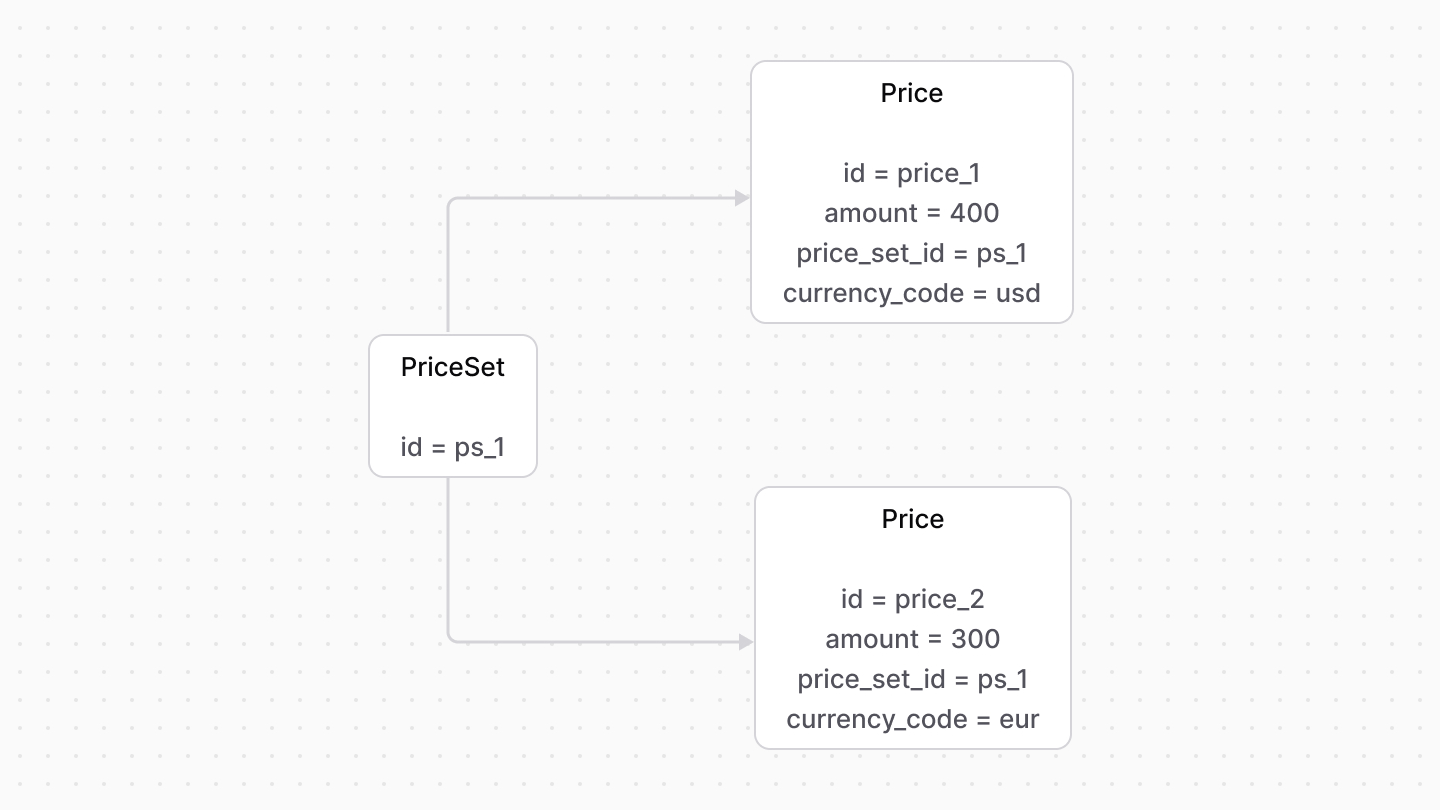
A `PriceSet` represents a collection of prices that are linked to a resource (for example, a product or a shipping option). Each of these prices are represented by the `Price` data module.
|
||
|
||
|
||
|
||
---
|
||
|
||
## Prices with Rules
|
||
|
||
### Rule Type
|
||
|
||
Each price within a price set can be applied for different conditions. These conditions are represented as rule types.
|
||
|
||
A `RuleType` defines custom conditions. Each rule type has a unique `rule_field`, referenced in rule values, such as when setting a rule of a price.
|
||
|
||
### Price Rule
|
||
|
||
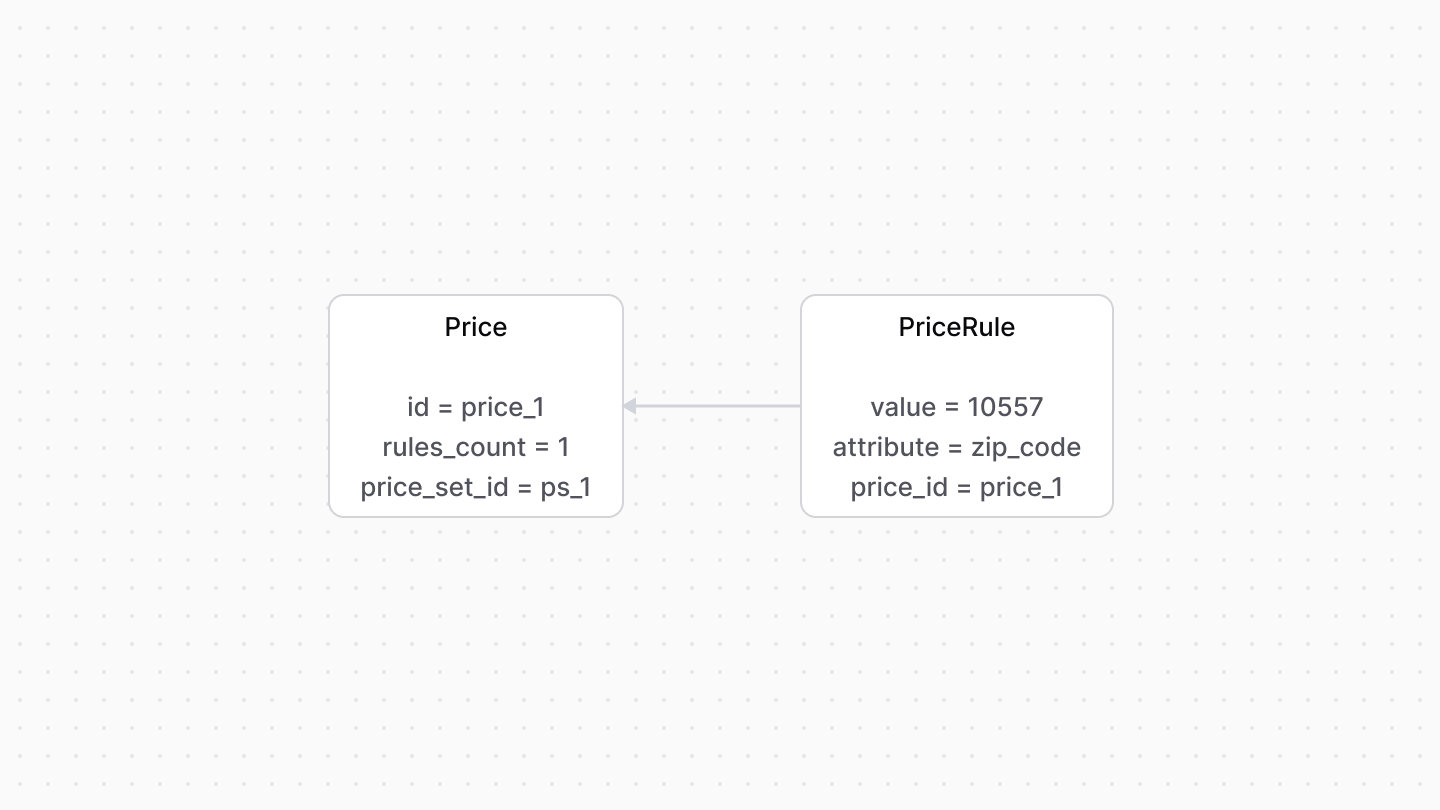
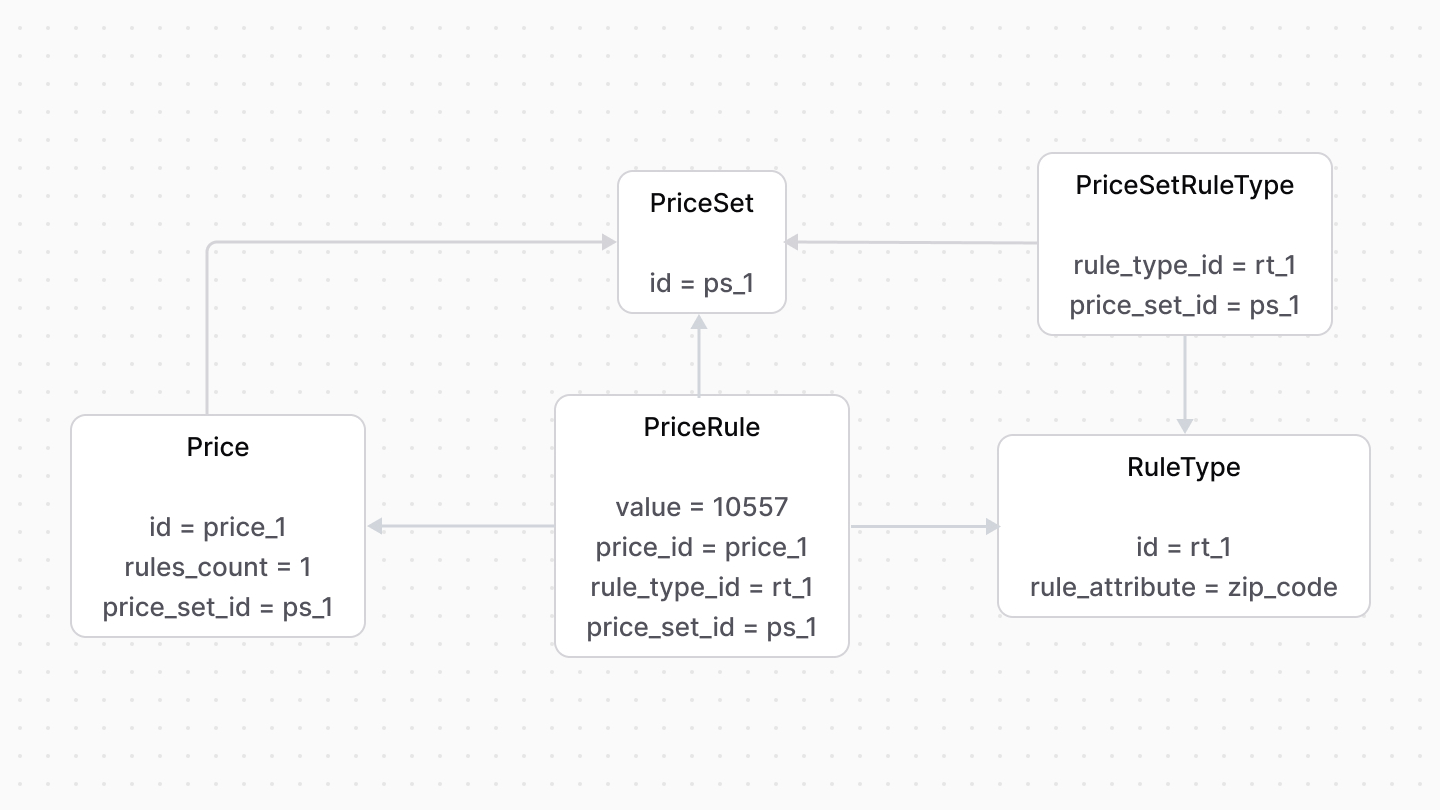
Each rule of a price within a price set is represented by the `PriceRule` data model, which holds the value of a rule type. The `Price` data model has a `rules_count` field, which indicates how many rules, represented by `PriceRule`, are applied to the price.
|
||
|
||
|
||
|
||
For example, you create a `zip_code` rule type. Then, a price within the price set can have the rule value `10557`, indicating that the price can only be applied within the `10557` zip code.
|
||
|
||
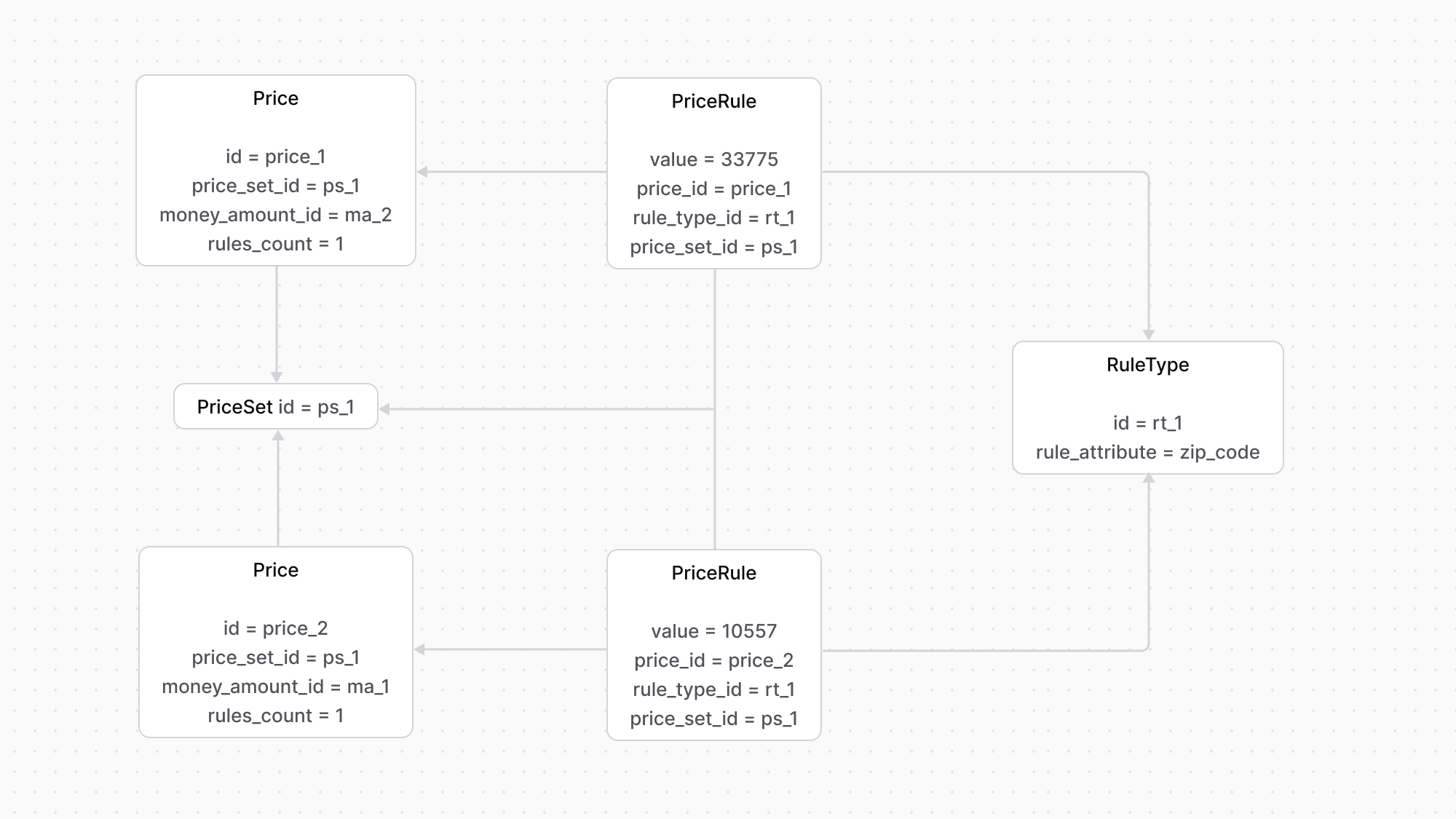
Each price within the price set can have different values for the same rule type.
|
||
|
||
For example:
|
||
|
||
|
||
|
||
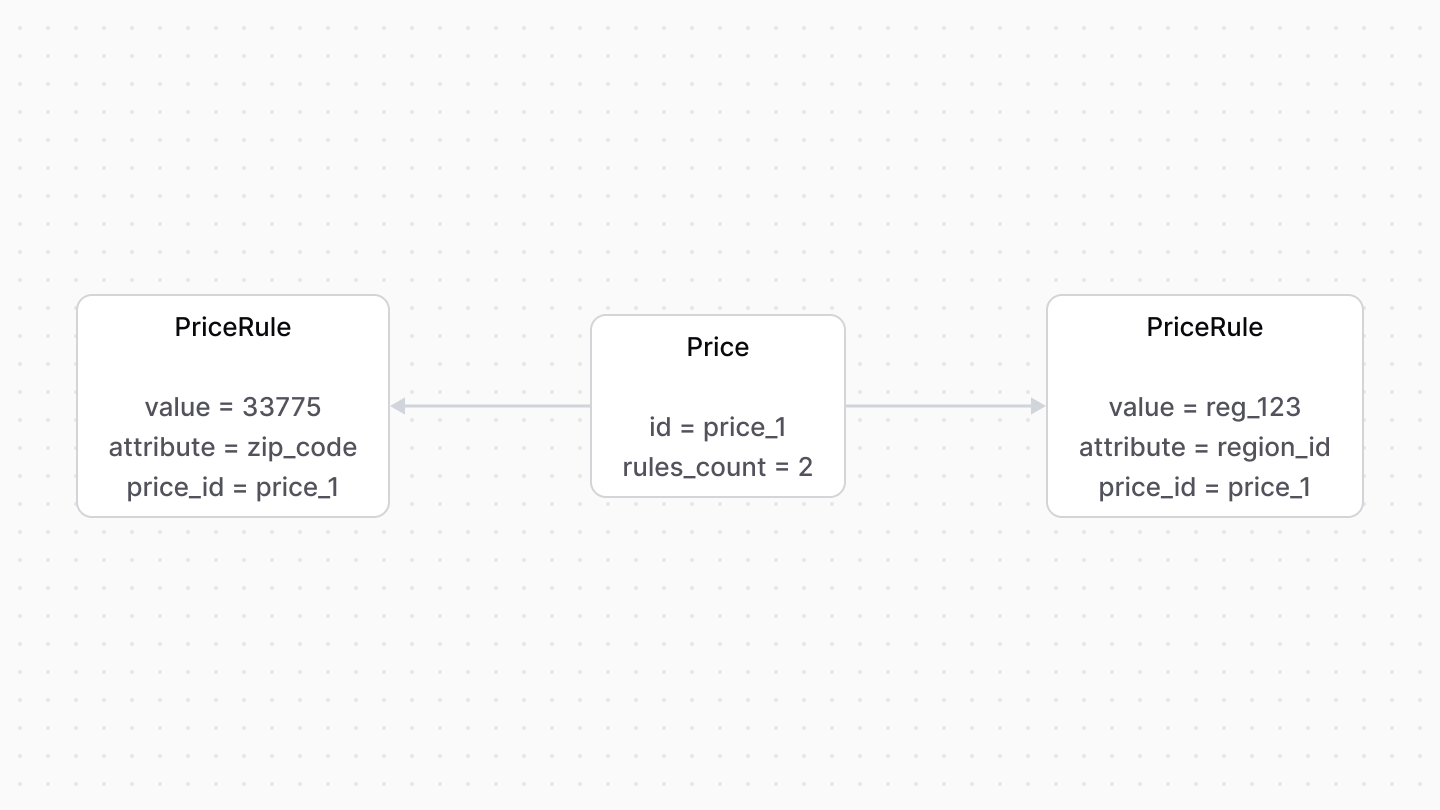
Each price can have multiple rules applied to it as well.
|
||
|
||
For example, a price can have the rules `zip_code` and `region_id` applied to it. In this case, the value of each rule is represented by a `PriceRule`.
|
||
|
||
|
||
|
||
### PriceSetRuleType
|
||
|
||
The `PriceSetRuleType` data model indicates what rules the prices can have within a price set. It creates a relation between the `PriceSet` and `RuleType` entities.
|
||
|
||
For example, to use the `zip_code` rule type on a price in a price set, the rule type must first be enabled on the price set through the `PriceSetRuleType`.
|
||
|
||
|
||
|
||
---
|
||
|
||
## Price List
|
||
|
||
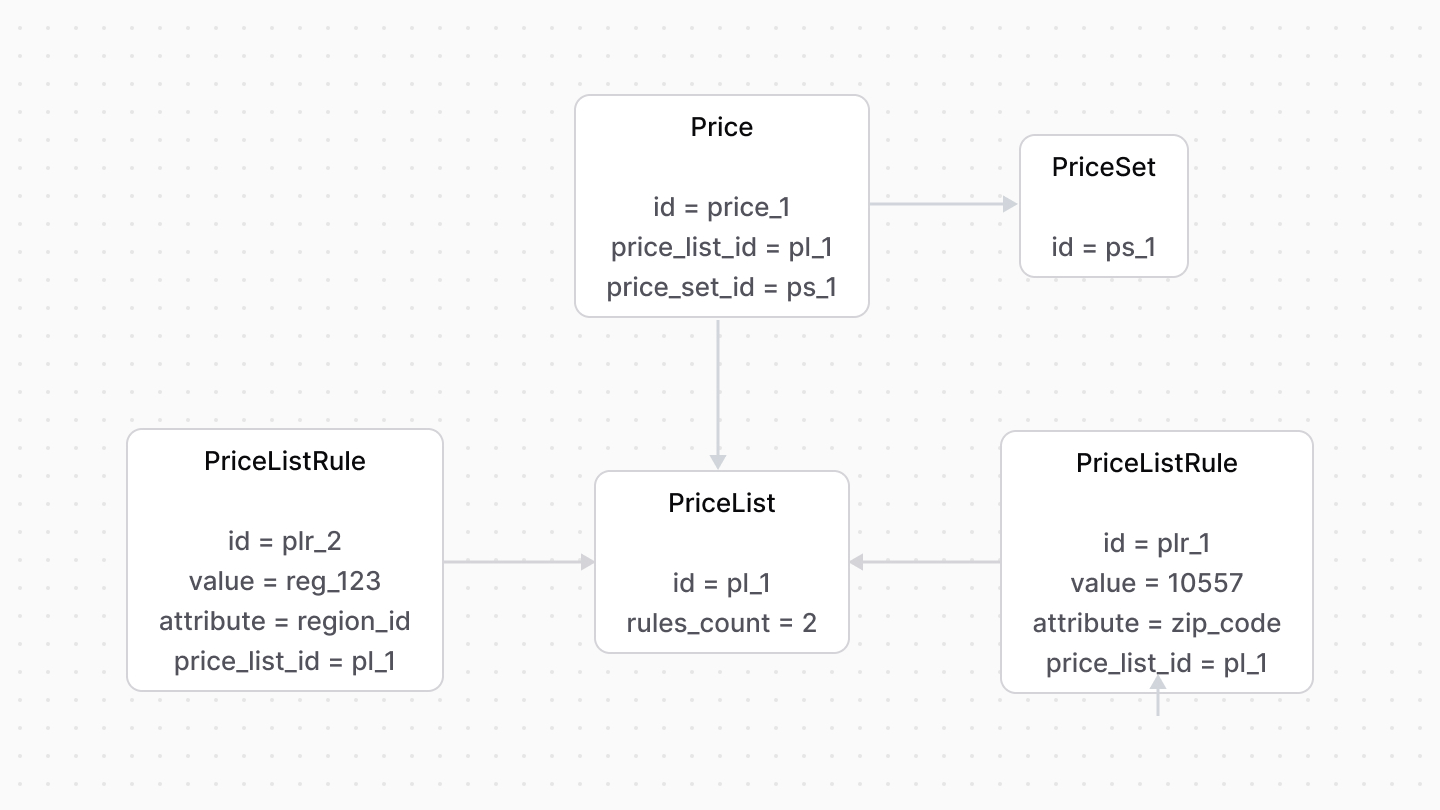
A `PriceList` is a group of prices only enabled if their rules are satisfied. A price list has optional `start_date` and `end_date` fields, which indicate the date range in which a price list can be applied.
|
||
|
||
Its associated prices are represented by the `Price` data model.
|
||
|
||
Each rule that can be applied to a price list is represented by the `PriceListRule` data model. The `rules_count` field of a `PriceList` indicates how many rules are applied to it.
|
||
|
||
Each rule of a price list can have more than one value, representing its values by the `PriceListRuleValue` data model.
|
||
|
||
|