 0c3e3ea88a
Adds a new customizations chapter with realistic example while maintaining the linear learning journey.

Preview: https://docs-v2-git-docs-customizations-chapter-medusajs.vercel.app/v2/customization
26 lines
1.1 KiB
Plaintext
26 lines
1.1 KiB
Plaintext
export const metadata = {
|
|
title: `${pageNumber} Build Custom Features`,
|
|
}
|
|
|
|
# {metadata.title}
|
|
|
|
In this chapter, you'll learn about the concepts you need to build custom features in your Medusa application.
|
|
|
|
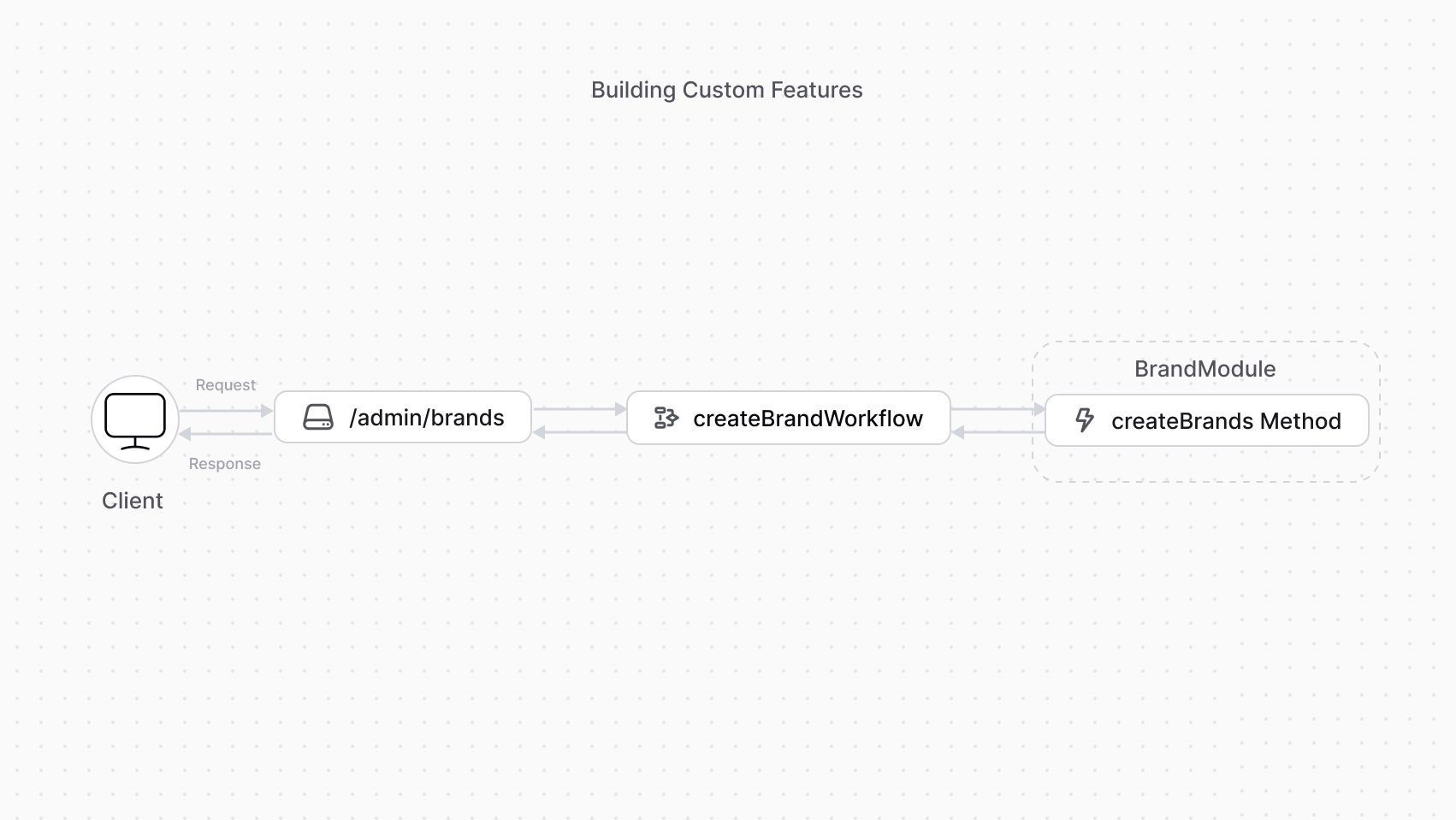
To add a custom feature to your application, you create:
|
|
|
|
1. A module with data models and a main service to manage them.
|
|
2. A workflow to create, update, and delete records of data models. You implement functionalities in a workflow to benefit from features such as roll-back in case of errors, retry configurations, and more.
|
|
3. An API route that exposes the workflow's functionality to clients, such as the storefront or admin dashboard.
|
|
|
|
|
|
|
|
---
|
|
|
|
## Next Chapters: Brand Module Example
|
|
|
|
In the next chapters, you'll follow an example to:
|
|
|
|
1. Add a Brand Module that creates a `Brand` data model and provides data-management features.
|
|
2. Add a workflow to create a brand.
|
|
3. Expose an API route that allows admin users to create a brand using the workflow.
|