 781d0ca624
- Added to docs on implementing auth flows using the module and API routes how to update a user's password
- Added guide on how to send a notification when a password token is generated
- Added a guide on implementing reset password flow in storefront
- Added OAS for the `/update` and `/reset-password` routes + generated specs for the API reference
344 lines
12 KiB
Plaintext
344 lines
12 KiB
Plaintext
export const metadata = {
|
|
title: `How to Use Authentication Routes`,
|
|
}
|
|
|
|
# {metadata.title}
|
|
|
|
In this document, you'll learn about the authentication routes and how to use them to create and log-in users, and reset their password.
|
|
|
|
<Note>
|
|
|
|
These routes are added by Medusa's HTTP layer, not the Auth Module.
|
|
|
|
</Note>
|
|
|
|
## Types of Authentication Flows
|
|
|
|
### 1. Basic Authentication Flow
|
|
|
|
This authentication flow doesn't require validation with third-party services.
|
|
|
|
<Note title="Example">
|
|
|
|
[How to register customer in storefront using basic authentication flow](../../../storefront-development/customers/register/page.mdx).
|
|
|
|
</Note>
|
|
|
|
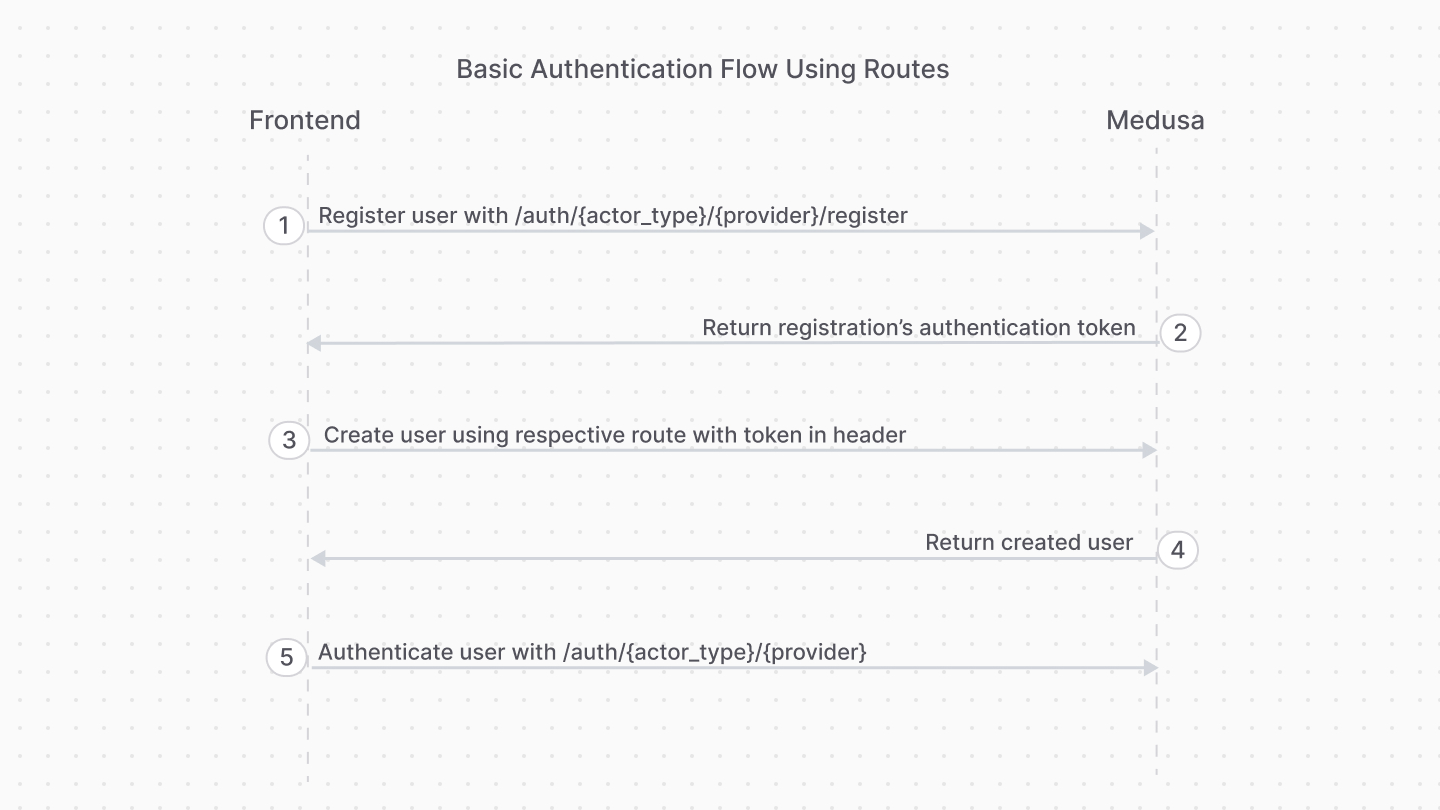
The steps are:
|
|
|
|
|
|
|
|
1. Register the user with the [Register Route](#register-route).
|
|
5. Use the authentication token to create the user with their respective API route.
|
|
- For example, for customers you would use the [Create Customer API route](!api!/store#customers_postcustomers).
|
|
- For admin users, you accept an invite using the [Accept Invite API route](!api!/admin#invites_postinvitesaccept)
|
|
2. Authenticate the user with the [Auth Route](#auth-route).
|
|
|
|
After registration, you only use the [Auth Route](#auth-route) for subsequent authentication.
|
|
|
|
### 2. Third-Party Service Authenticate Flow
|
|
|
|
This authentication flow authenticates the user with a third-party service, such as Google.
|
|
|
|
<Note title="Example">
|
|
|
|
[How to authenticate customer with a third-party provider in the storefront.](../../../storefront-development/customers/third-party-login/page.mdx).
|
|
|
|
</Note>
|
|
|
|
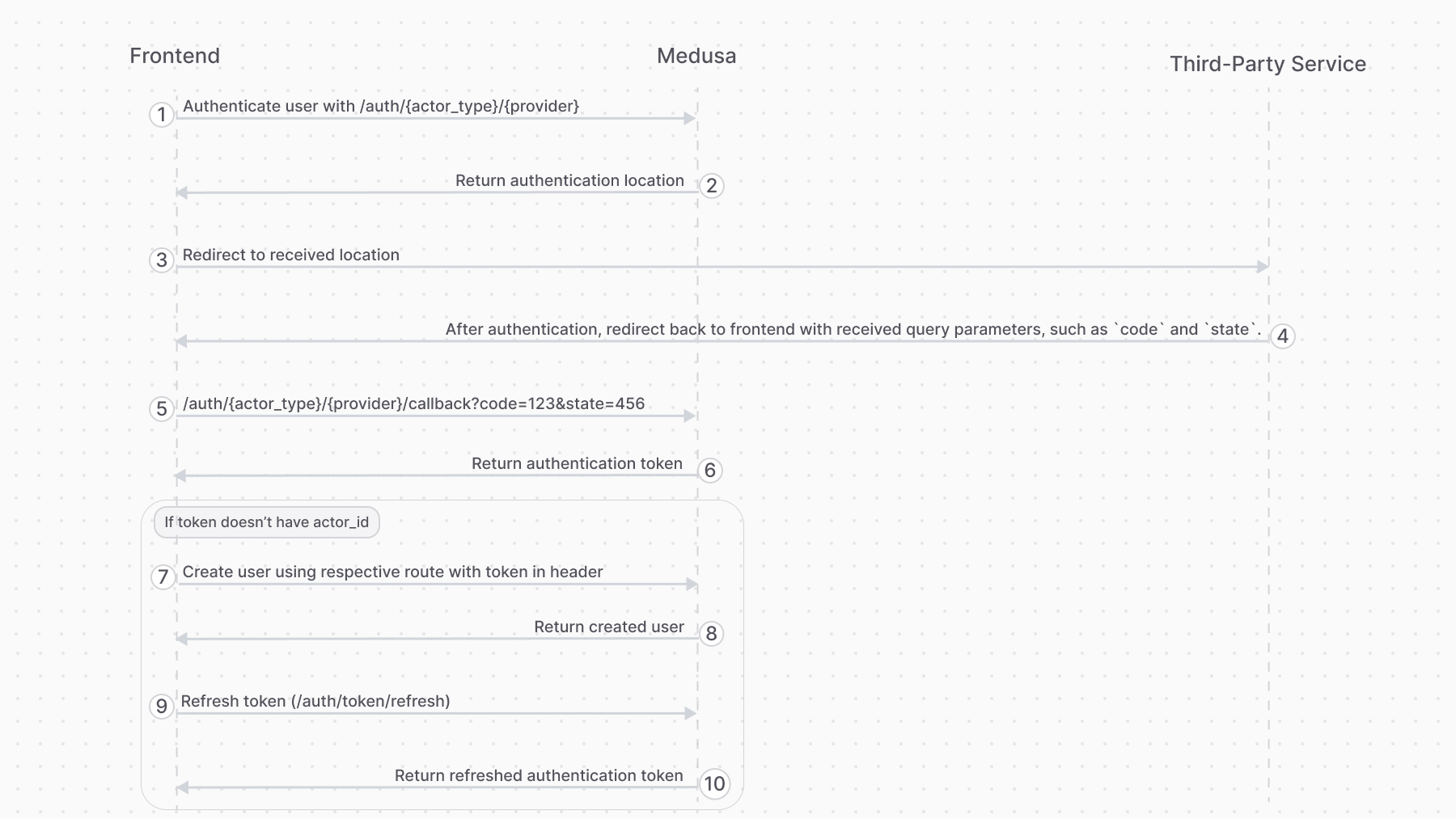
It requires the following steps:
|
|
|
|
|
|
|
|
1. Authenticate the user with the [Auth Route](#auth-route).
|
|
2. The auth route returns a URL to authenticate with third-party service, such as login with Google. The frontend (such as a storefront), when it receives a `location` property in the response, must redirect to the returned location.
|
|
3. Once the authentication with the third-party service finishes, it redirects back to the frontend with a `code` query parameter. So, make sure your third-party service is configured to redirect to your frontend page after successful authentication.
|
|
4. The frontend sends a request to the [Callback Route](#callback-route) passing the `code` query parameter.
|
|
5. If the callback validation is successful, the frontend receives the authentication token.
|
|
6. Decode the received token in the frontend using tools like [react-jwt](https://www.npmjs.com/package/react-jwt).
|
|
- If the decoded data has an `actor_id` property, then the user is already registered. So, use this token for subsequent authenticated requests.
|
|
- If not, follow the rest of the steps.
|
|
7. The frontend uses the authentication token to create the user with their respective API route.
|
|
- For example, for customers you would use the [Create Customer API route](!api!/store#customers_postcustomers).
|
|
- For admin users, you accept an invite using the [Accept Invite API route](!api!/admin#invites_postinvitesaccept)
|
|
8. The frontend sends a request to the [Refresh Token Route](#refresh-token-route) to retrieve a new token with the user information populated.
|
|
|
|
|
|
---
|
|
|
|
## Register Route
|
|
|
|
The Medusa application defines an API route at `/auth/{actor_type}/{provider}/register` that creates an auth identity for an actor type, such as a `customer`. It returns a JWT token that you pass to an API route that creates the user.
|
|
|
|
```bash
|
|
curl -X POST http://localhost:9000/auth/{actor_type}/{providers}/register
|
|
-H 'Content-Type: application/json' \
|
|
--data-raw '{
|
|
"email": "Whitney_Schultz@gmail.com"
|
|
// ...
|
|
}'
|
|
```
|
|
|
|
<Note>
|
|
|
|
This API route is useful for providers like `emailpass` that uses custom logic to authenticate a user. For authentication providers that authenticate with third-party services, such as Google, use the [Auth Route](#auth-route) instead.
|
|
|
|
</Note>
|
|
|
|
For example, if you're registering a customer, you:
|
|
|
|
1. Send a request to `/auth/customer/emailpass/register` to retrieve the registration JWT token.
|
|
2. Send a request to the [Create Customer API route](!api!/store#customers_postcustomers) to create the customer, passing the [JWT token in the header](!api!/store#authentication).
|
|
|
|
### Path Parameters
|
|
|
|
Its path parameters are:
|
|
|
|
- `{actor_type}`: the actor type of the user you're authenticating. For example, `customer`.
|
|
- `{provider}`: the auth provider to handle the authentication. For example, `emailpass`.
|
|
|
|
### Request Body Parameters
|
|
|
|
This route accepts in the request body the data that the specified authentication provider requires to handle authentication.
|
|
|
|
For example, the EmailPass provider requires an `email` and `password` fields in the request body.
|
|
|
|
### Response Fields
|
|
|
|
If the authentication is successful, you'll receive a `token` field in the response body object:
|
|
|
|
```json
|
|
{
|
|
"token": "..."
|
|
}
|
|
```
|
|
|
|
Use that token in the header of subsequent requests to send authenticated requests.
|
|
|
|
---
|
|
|
|
## Login Route
|
|
|
|
The Medusa application defines an API route at `/auth/{actor_type}/{provider}` that authenticates a user of an actor type. It returns a JWT token that can be passed in [the header of subsequent requests](!api!/store#authentication) to send authenticated requests.
|
|
|
|
```bash
|
|
curl -X POST http://localhost:9000/auth/{actor_type}/{providers}
|
|
-H 'Content-Type: application/json' \
|
|
--data-raw '{
|
|
"email": "Whitney_Schultz@gmail.com"
|
|
// ...
|
|
}'
|
|
```
|
|
|
|
For example, if you're authenticating a customer, you send a request to `/auth/customer/emailpass`.
|
|
|
|
### Path Parameters
|
|
|
|
Its path parameters are:
|
|
|
|
- `{actor_type}`: the actor type of the user you're authenticating. For example, `customer`.
|
|
- `{provider}`: the auth provider to handle the authentication. For example, `emailpass`.
|
|
|
|
### Request Body Parameters
|
|
|
|
This route accepts in the request body the data that the specified authentication provider requires to handle authentication.
|
|
|
|
For example, the EmailPass provider requires an `email` and `password` fields in the request body.
|
|
|
|
### Response Fields
|
|
|
|
If the authentication is successful, you'll receive a `token` field in the response body object:
|
|
|
|
```json
|
|
{
|
|
"token": "..."
|
|
}
|
|
```
|
|
|
|
Use that token in the header of subsequent requests to send authenticated requests.
|
|
|
|
If the authentication requires more action with a third-party service, you'll receive a `location` property:
|
|
|
|
```json
|
|
{
|
|
"location": "https://..."
|
|
}
|
|
```
|
|
|
|
Redirect to that URL in the frontend to continue the authentication process with the third-party service.
|
|
|
|
<Note title="Example">
|
|
|
|
[How to login Customers using the authentication route](../../../storefront-development/customers/login/page.mdx).
|
|
|
|
</Note>
|
|
|
|
---
|
|
|
|
## Validate Callback Route
|
|
|
|
The Medusa application defines an API route at `/auth/{actor_type}/{provider}/callback` that's useful for validating the authentication callback or redirect from third-party services like Google.
|
|
|
|
```bash
|
|
curl -X POST http://localhost:9000/auth/{actor_type}/{providers}/callback?code=123
|
|
```
|
|
|
|
<Note title="Tip">
|
|
|
|
Refer to the [third-party authentication flow](#2-third-party-service-authenticate-flow) section to see how this route fits into the authentication flow.
|
|
|
|
</Note>
|
|
|
|
### Path Parameters
|
|
|
|
Its path parameters are:
|
|
|
|
- `{actor_type}`: the actor type of the user you're authenticating. For example, `customer`.
|
|
- `{provider}`: the auth provider to handle the authentication. For example, `google`.
|
|
|
|
### Query Parameters
|
|
|
|
This route accepts a `code` query parameter, which is the code received from the third-party provider.
|
|
|
|
### Response Fields
|
|
|
|
If the authentication is successful, you'll receive a `token` field in the response body object:
|
|
|
|
```json
|
|
{
|
|
"token": "..."
|
|
}
|
|
```
|
|
|
|
In your frontend, decode the token using tools like [react-jwt](https://www.npmjs.com/package/react-jwt):
|
|
|
|
- If the decoded data has an `actor_id` property, the user is already registered. So, use this token for subsequent authenticated requests.
|
|
- If not, use the token in the header of a request that creates the user, such as the [Create Customer API route](!api!/store#customers_postcustomers).
|
|
|
|
---
|
|
|
|
## Refresh Token Route
|
|
|
|
The Medusa application defines an API route at `/auth/token/refresh` that's useful after authenticating a user with a third-party service to populate the user's token with their new information.
|
|
|
|
It requires the user's JWT token that they received from the authentication or callback routes.
|
|
|
|
```bash
|
|
curl -X POST http://localhost:9000/auth/token/refresh \
|
|
-H 'Authorization: Bearer {token}'
|
|
```
|
|
|
|
### Response Fields
|
|
|
|
If the token was refreshed successfully, you'll receive a `token` field in the response body object:
|
|
|
|
```json
|
|
{
|
|
"token": "..."
|
|
}
|
|
```
|
|
|
|
Use that token in the header of subsequent requests to send authenticated requests.
|
|
|
|
---
|
|
|
|
## Reset Password Routes
|
|
|
|
To reset a user's password:
|
|
|
|
1. Generate a token using the [Generate Reset Password Token API route](#generate-reset-password-token-route).
|
|
- The API route emits the `auth.password_reset` event, passing the token in the payload.
|
|
- You can create a subscriber, as seen in [this guide](../reset-password/page.mdx), that listens to the event and send a notification to the user.
|
|
2. Pass the token to the [Reset Password API route](#reset-password-route) to reset the password.
|
|
- The URL in the user's notification should direct them to a frontend URL, which sends a request to this route.
|
|
|
|
<Note title="Example">
|
|
|
|
[Storefront Development: How to Reset a Customer's Password.](../../../storefront-development/customers/reset-password/page.mdx)
|
|
|
|
</Note>
|
|
|
|
### Generate Reset Password Token Route
|
|
|
|
The Medusa application defines an API route at `/auth/{actor_type}/{auth_provider}/reset-password` that emits the `auth.password_reset` event, passing the token in the payload.
|
|
|
|
```bash
|
|
curl -X POST http://localhost:9000/auth/{actor_type}/{providers}/reset-password
|
|
-H 'Content-Type: application/json' \
|
|
--data-raw '{
|
|
"identifier": "Whitney_Schultz@gmail.com"
|
|
}'
|
|
```
|
|
|
|
<Note>
|
|
|
|
This API route is useful for providers like `emailpass` that store a user's password and use it for authentication.
|
|
|
|
</Note>
|
|
|
|
#### Path Parameters
|
|
|
|
Its path parameters are:
|
|
|
|
- `{actor_type}`: the actor type of the user you're authenticating. For example, `customer`.
|
|
- `{provider}`: the auth provider to handle the authentication. For example, `emailpass`.
|
|
|
|
#### Request Body Parameters
|
|
|
|
This route accepts in the request body an object having the following property:
|
|
|
|
- `identifier`: The user's identifier in the specified auth provider. For example, for the `emailpass` auth provider, you pass the user's email.
|
|
|
|
#### Response Fields
|
|
|
|
If the authentication is successful, the request returns a `201` response code.
|
|
|
|
### Reset Password Route
|
|
|
|
The Medusa application defines an API route at `/auth/{actor_type}/{auth_provider}/update` that accepts a token and, if valid, updates the user's password.
|
|
|
|
```bash
|
|
curl -X POST http://localhost:9000/auth/{actor_type}/{providers}/update?token=123
|
|
-H 'Content-Type: application/json' \
|
|
--data-raw '{
|
|
"email": "Whitney_Schultz@gmail.com",
|
|
"password": "supersecret"
|
|
}'
|
|
```
|
|
|
|
<Note>
|
|
|
|
This API route is useful for providers like `emailpass` that store a user's password and use it for logging them in.
|
|
|
|
</Note>
|
|
|
|
#### Path Parameters
|
|
|
|
Its path parameters are:
|
|
|
|
- `{actor_type}`: the actor type of the user you're authenticating. For example, `customer`.
|
|
- `{provider}`: the auth provider to handle the authentication. For example, `emailpass`.
|
|
|
|
#### Query Parameters
|
|
|
|
The route accepts a `token` query parameter, which is the token generated using the [Generate Reset Password Token route](#generate-reset-password-token-route).
|
|
|
|
### Request Body Parameters
|
|
|
|
This route accepts in the request body an object that has the data necessary for the provider to update the user's password.
|
|
|
|
For the `emailpass` provider, you must pass the following properties:
|
|
|
|
- `email`: The user's email.
|
|
- `password`: The new password.
|
|
|
|
### Response Fields
|
|
|
|
If the authentication is successful, the request returns an object with a `success` property set to `true`:
|
|
|
|
```json
|
|
{
|
|
"success": "true"
|
|
}
|
|
```
|