 914d773d3a
* initialized next.js project

* finished markdown sections

* added operation schema component

* change page metadata

* eslint fixes

* fixes related to deployment

* added response schema

* resolve max stack issue

* support for different property types

* added support for property types

* added loading for components

* added more loading

* type fixes

* added oneOf type

* removed console

* fix replace with push

* refactored everything

* use static content for description

* fixes and improvements

* added code examples section

* fix path name

* optimizations

* fixed tag navigation

* add support for admin and store references

* general enhancements

* optimizations and fixes

* fixes and enhancements

* added search bar

* loading enhancements

* added loading

* added code blocks

* added margin top

* add empty response text

* fixed oneOf parameters

* added path and query parameters

* general fixes

* added base path env variable

* small fix for arrays

* enhancements

* design enhancements

* general enhancements

* fix isRequired

* added enum values

* enhancements

* general fixes

* general fixes

* changed oas generation script

* additions to the introduction section

* added copy button for code + other enhancements

* fix response code block

* fix metadata

* formatted store introduction

* move sidebar logic to Tags component

* added test env variables

* fix code block bug

* added loading animation

* added expand param + loading

* enhance operation loading

* made responsive + improvements

* added loading provider

* fixed loading

* adjustments for small devices

* added sidebar label for endpoints

* added feedback component

* fixed analytics

* general fixes

* listen to scroll for other headings

* added sample env file

* update api ref files + support new fields

* fix for external docs link

* added new sections

* fix last item in sidebar not showing

* move docs content to www/docs

* change redirect url

* revert change

* resolve build errors

* configure rewrites

* changed to environment variable url

* revert changing environment variable name

* add environment variable for API path

* fix links

* fix tailwind settings

* remove vercel file

* reconfigured api route

* move api page under api

* fix page metadata

* fix external link in navigation bar

* update api spec

* updated api specs

* fixed google lint error

* add max-height on request samples

* add padding before loading

* fix for one of name

* fix undefined types

* general fixes

* remove response schema example

* redesigned navigation bar

* redesigned sidebar

* fixed up paddings

* added feedback component + report issue

* fixed up typography, padding, and general styling

* redesigned code blocks

* optimization

* added error timeout

* fixes

* added indexing with algolia + fixes

* fix errors with algolia script

* redesign operation sections

* fix heading scroll

* design fixes

* fix padding

* fix padding + scroll issues

* fix scroll issues

* improve scroll performance

* fixes for safari

* optimization and fixes

* fixes to docs + details animation

* padding fixes for code block

* added tab animation

* fixed incorrect link

* added selection styling

* fix lint errors

* redesigned details component

* added detailed feedback form

* api reference fixes

* fix tabs

* upgrade + fixes

* updated documentation links

* optimizations to sidebar items

* fix spacing in sidebar item

* optimizations and fixes

* fix endpoint path styling

* remove margin

* final fixes

* change margin on small devices

* generated OAS

* fixes for mobile

* added feedback modal

* optimize dark mode button

* fixed color mode useeffect

* minimize dom size

* use new style system

* radius and spacing design system

* design fixes

* fix eslint errors

* added meta files

* change cron schedule

* fix docusaurus configurations

* added operating system to feedback data

* change content directory name

* fixes to contribution guidelines

* revert renaming content

* added api-reference to documentation workflow

* fixes for search

* added dark mode + fixes

* oas fixes

* handle bugs

* added code examples for clients

* changed tooltip text

* change authentication to card

* change page title based on selected section

* redesigned mobile navbar

* fix icon colors

* fix key colors

* fix medusa-js installation command

* change external regex in algolia

* change changeset

* fix padding on mobile

* fix hydration error

* update depedencies
107 lines
4.7 KiB
Markdown
107 lines
4.7 KiB
Markdown
---
|
||
description: 'Learn how to integrate Slack with the Medusa backend. Learn how to create and configure a Slack app and install the Slack plugin on the Medusa backend.'
|
||
addHowToData: true
|
||
---
|
||
|
||
# Slack
|
||
|
||
In this documentation, you'll learn how to add the [Slack plugin](https://github.com/medusajs/medusa/tree/master/packages/medusa-plugin-slack-notification) to your Medusa backend to start receiving order notifications.
|
||
|
||
## Overview
|
||
|
||
When you add this plugin, the store owner can receive order notifications into their Slack workspace.
|
||
|
||
The notification contains details about the order including:
|
||
|
||
- Customer's details and address
|
||
- Items ordered, their quantity, and the price
|
||
- Order totals including Tax amount.
|
||
- Promotion details if there are any (this is optional and can be turned off).
|
||
|
||
The plugin registers a subscriber to the `order.placed` event. When an order is placed, the subscriber handler method uses the ID of the order to retrieve order details mentioned above.
|
||
|
||
Then, the order notification is sent to Slack using Webhooks. So, you'll need to create a Slack App, add it into your workspace, and activate Incoming Webhooks.
|
||
|
||
---
|
||
|
||
## Prerequisites
|
||
|
||
### Slack Account
|
||
|
||
To follow along with this guide, you need to have a Slack account with a connected workspace. If you don’t have one, you can [create a free account on Slack](https://slack.com/).
|
||
|
||
### Medusa Backend
|
||
|
||
This tutorial assumes you already have a Medusa backend installed. If you don’t, please follow along with the [quickstart guide](../../development/backend/install.mdx). The Medusa backend must also have an event bus module installed, which is available when using the default Medusa backend starter.
|
||
|
||
---
|
||
|
||
## Create Slack App
|
||
|
||
The first step is to create a Slack app. This app will be connected to your workspace and will have Incoming Webhooks activated to receive notifications from the Medusa backend using a Webhook URL.
|
||
|
||
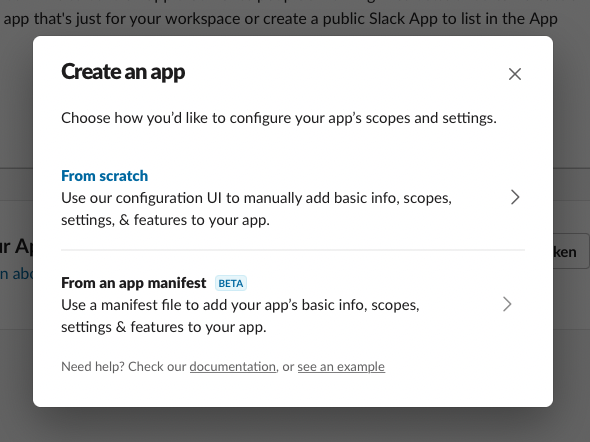
Go to [Slack API](https://api.slack.com/) and click Create app. This will take you to a new page with a pop-up. In the pop-up, choose From scratch.
|
||
|
||
|
||
|
||
You’ll then need to enter some info like the App name and the workspace it will be connected to. Once you’re done, the app will be created.
|
||
|
||
### Activate Incoming Webhooks
|
||
|
||
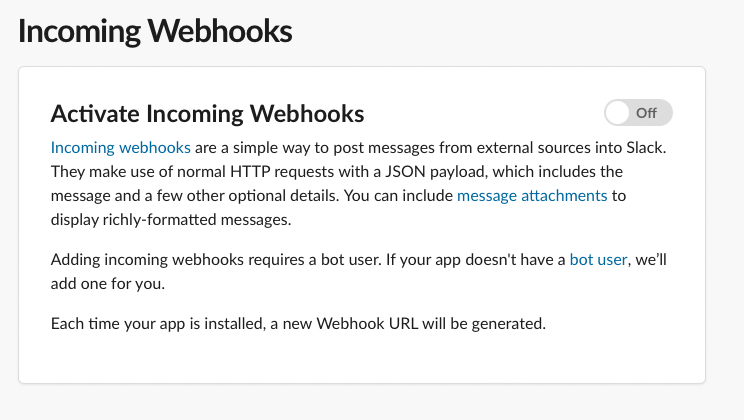
To activate Incoming Webhooks, choose Features > Incoming Webhooks from the sidebar. At first, it will be disabled so make sure to enable it by switching the toggle.
|
||
|
||
|
||
|
||
### Add New Webhook
|
||
|
||
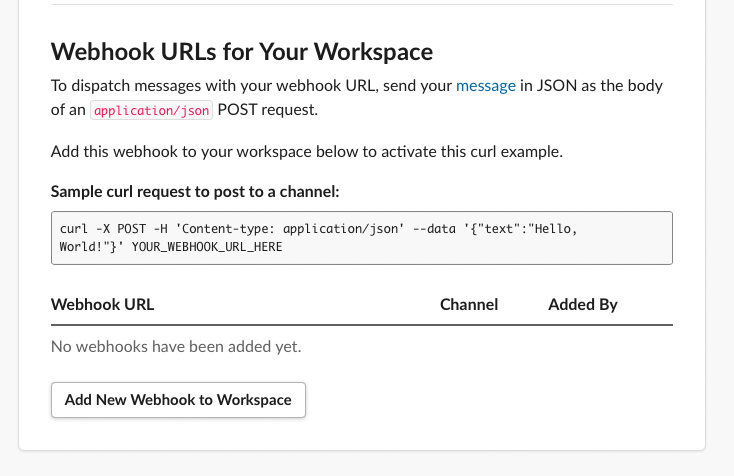
After activating Incoming Webhooks, on the same page scroll down and click on the Add New Webhook to Workspace button.
|
||
|
||
|
||
|
||
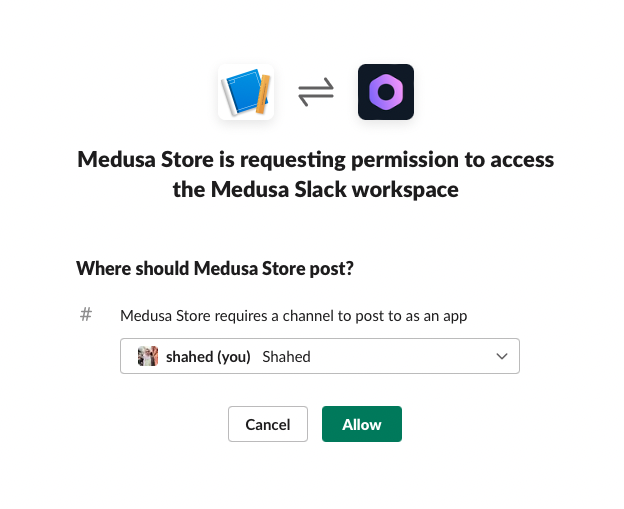
After that, choose the channel to send the notifications to. You can also choose a DM to send the notifications to. Once you’re done click Allow.
|
||
|
||
|
||
|
||
This will create a new Webhook with a URL which you can see in the table at the end of the Incoming Webhooks page. Copy the URL as you’ll use it in the next section.
|
||
|
||
---
|
||
|
||
## Install Slack Plugin
|
||
|
||
The next step is to install Medusa’s [Slack plugin](https://github.com/medusajs/medusa/tree/master/packages/medusa-plugin-slack-notification) into your Medusa backend.
|
||
|
||
Open the terminal in the Medusa backend’s directory and run the following command:
|
||
|
||
```bash npm2yarn
|
||
npm install medusa-plugin-slack-notification
|
||
```
|
||
|
||
After that, open `medusa-config.js` and add the new plugin with its configurations in the `plugins` array:
|
||
|
||
```jsx title=medusa-config.js
|
||
const plugins = [
|
||
// ...,
|
||
{
|
||
resolve: `medusa-plugin-slack-notification`,
|
||
options: {
|
||
show_discount_code: false,
|
||
slack_url: `<WEBHOOK_URL>`,
|
||
admin_orders_url: `http://localhost:7001/a/orders`,
|
||
},
|
||
},
|
||
]
|
||
```
|
||
|
||
- Make sure to change `<WEBHOOK_URL>` with the Webhook URL you copied after creating the Slack app.
|
||
- The `show_discount_code` option enables or disables showing the discount code in the notification sent to Slack.
|
||
- The `admin_orders_url` is the prefix of the URL of the order detail pages on your admin panel. If you’re using Medusa’s Admin locally, it should be `http://localhost:7001/a/orders`. This will result in a URL like `http://localhost:7001/a/orders/order_01FYP7DM7PS43H9VQ1PK59ZR5G`.
|
||
|
||
That’s all you need to do to integrate Slack into Medusa!
|
||
|
||
---
|
||
|
||
## See Also
|
||
|
||
- Install [Medusa's Admin](../../admin/quickstart.mdx) for the full order-management experience.
|
||
- Install the [Next.js Starter Template](../../starters/nextjs-medusa-starter.mdx).
|