
216 lines
6.4 KiB
Plaintext
216 lines
6.4 KiB
Plaintext
---
|
||
sidebar_label: "Authentication Flows"
|
||
---
|
||
|
||
export const metadata = {
|
||
title: `Authentication Flows with the Auth Main Service`,
|
||
}
|
||
|
||
# {metadata.title}
|
||
|
||
In this document, you'll learn how to use the Auth Module's main service's methods to implement authentication flows and reset a user's password.
|
||
|
||
## Authentication Methods
|
||
|
||
### Register
|
||
|
||
The [register method of the Auth Module's main service](/references/auth/register) creates an auth identity that can be authenticated later.
|
||
|
||
For example:
|
||
|
||
```ts
|
||
const data = await authModuleService.register(
|
||
"emailpass",
|
||
// passed to auth provider
|
||
{
|
||
// ...
|
||
}
|
||
)
|
||
```
|
||
|
||
This method calls the `register` method of the provider specified in the first parameter and returns its data.
|
||
|
||
### Authenticate
|
||
|
||
To authenticate a user, you use the [authenticate method of the Auth Module's main service](/references/auth/authenticate). For example:
|
||
|
||
```ts
|
||
const data = await authModuleService.authenticate(
|
||
"emailpass",
|
||
// passed to auth provider
|
||
{
|
||
// ...
|
||
}
|
||
)
|
||
```
|
||
|
||
This method calls the `authenticate` method of the provider specified in the first parameter and returns its data.
|
||
|
||
---
|
||
|
||
## Auth Flow 1: Basic Authentication
|
||
|
||
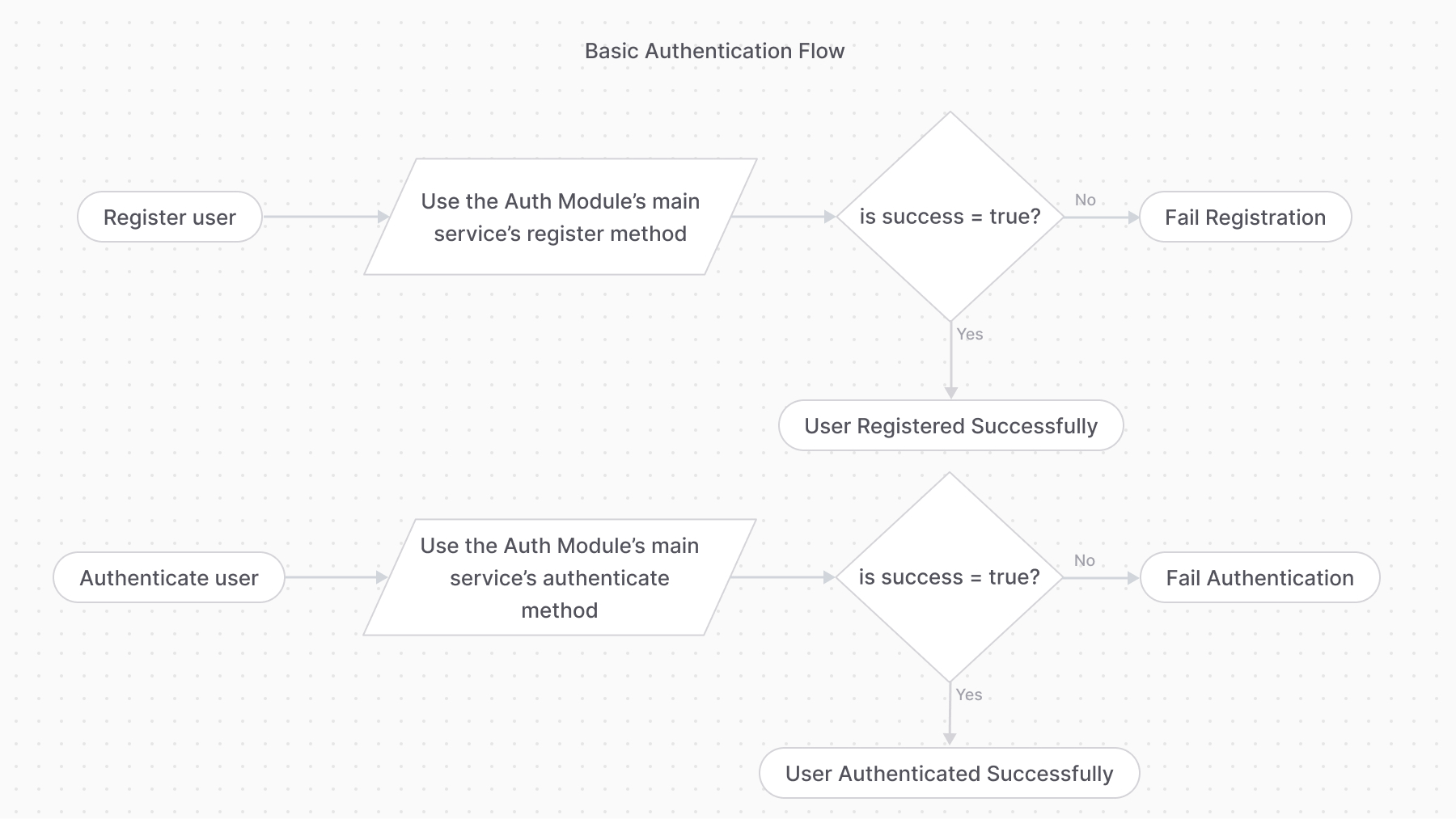
The basic authentication flow requires first using the `register` method, then the `authenticate` method:
|
||
|
||
```ts
|
||
const { success, authIdentity, error } = await authModuleService.register(
|
||
"emailpass",
|
||
// passed to auth provider
|
||
{
|
||
// ...
|
||
}
|
||
)
|
||
|
||
if (error) {
|
||
// registration failed
|
||
// TODO return an error
|
||
return
|
||
}
|
||
|
||
// later (can be another route for log-in)
|
||
const { success, authIdentity, location } = await authModuleService.authenticate(
|
||
"emailpass",
|
||
// passed to auth provider
|
||
{
|
||
// ...
|
||
}
|
||
)
|
||
|
||
if (success && !location) {
|
||
// user is authenticated
|
||
}
|
||
```
|
||
|
||
If `success` is true and `location` isn't set, the user is authenticated successfully, and their authentication details are available within the `authIdentity` object.
|
||
|
||
The next section explains the flow if `location` is set.
|
||
|
||
<Note>
|
||
|
||
Check out the [AuthIdentity](/references/auth/models/AuthIdentity) reference for the received properties in `authIdentity`.
|
||
|
||
</Note>
|
||
|
||
|
||
|
||
### Auth Identity with Same Identifier
|
||
|
||
If an auth identity, such as a `customer`, tries to register with an email of another auth identity, the `register` method returns an error. This can happen either if another customer is using the same email, or an admin user has the same email.
|
||
|
||
There are two ways to handle this:
|
||
|
||
- Consider the customer authenticated if the `authenticate` method validates that the email and password are correct. This allows admin users, for example, to authenticate as customers.
|
||
- Return an error message to the customer, informing them that the email is already in use.
|
||
|
||
---
|
||
|
||
## Auth Flow 2: Third-Party Service Authentication
|
||
|
||
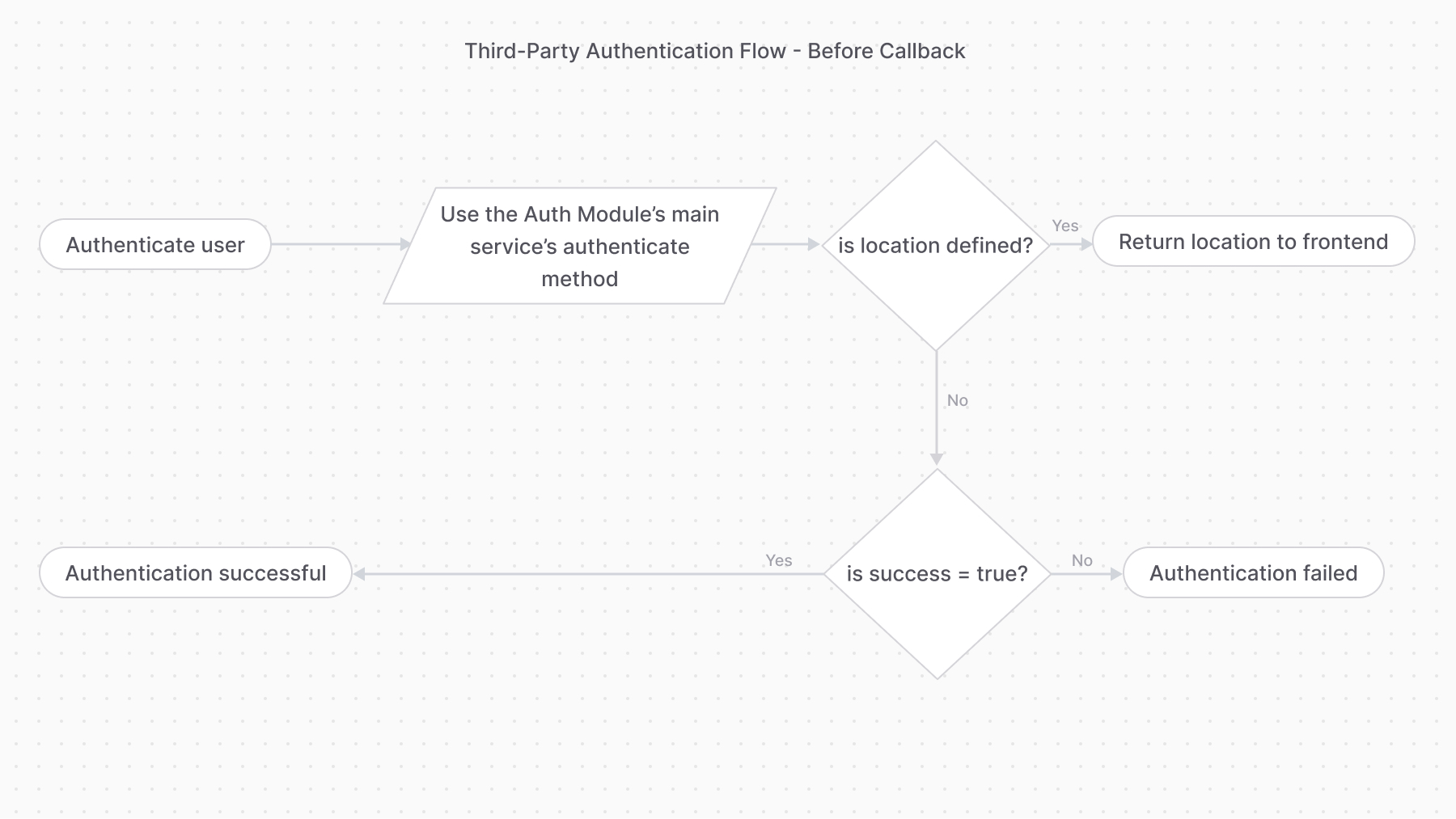
The third-party service authentication method requires using the `authenticate` method first:
|
||
|
||
```ts
|
||
const { success, authIdentity, location } = await authModuleService.authenticate(
|
||
"google",
|
||
// passed to auth provider
|
||
{
|
||
// ...
|
||
}
|
||
)
|
||
|
||
if (location) {
|
||
// return the location for the front-end to redirect to
|
||
}
|
||
|
||
if (!success) {
|
||
// authentication failed
|
||
}
|
||
|
||
// authentication successful
|
||
```
|
||
|
||
If the `authenticate` method returns a `location` property, the authentication process requires the user to perform an action with a third-party service. So, you return the `location` to the front-end or client to redirect to that URL.
|
||
|
||
For example, when using the `google` provider, the `location` is the URL that the user is navigated to login.
|
||
|
||
|
||
|
||
### Overriding Callback URL
|
||
|
||
The Google and GitHub providers allow you to override their `callbackUrl` option during authentication. This is useful when you redirect the user after authentication to a URL based on its actor type. For example, you redirect admin users and customers to different pages.
|
||
|
||
```ts
|
||
const { success, authIdentity, location } = await authModuleService.authenticate(
|
||
"google",
|
||
// passed to auth provider
|
||
{
|
||
// ...
|
||
callback_url: "example.com",
|
||
}
|
||
)
|
||
```
|
||
|
||
### validateCallback
|
||
|
||
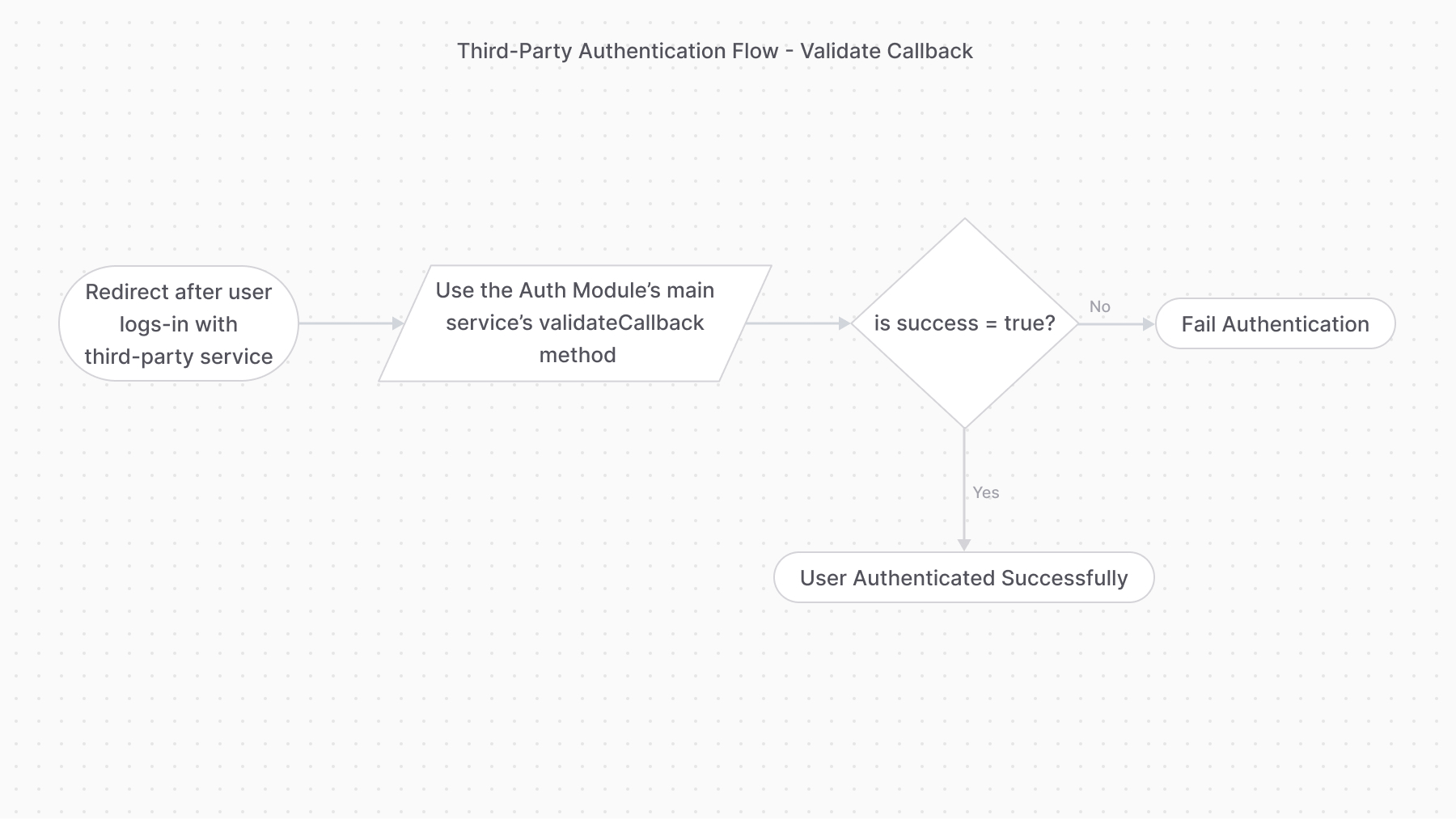
Providers handling this authentication flow must implement the `validateCallback` method. It implements the logic to validate the authentication with the third-party service.
|
||
|
||
So, once the user performs the required action with the third-party service (for example, log-in with Google), the frontend must redirect to an API route that uses the [validateCallback method of the Auth Module's main service](/references/auth/validateCallback).
|
||
|
||
The method calls the specified provider’s `validateCallback` method passing it the authentication details it received in the second parameter:
|
||
|
||
```ts
|
||
const { success, authIdentity } = await authModuleService.validateCallback(
|
||
"google",
|
||
// passed to auth provider
|
||
{
|
||
// request data, such as
|
||
url,
|
||
headers,
|
||
query,
|
||
body,
|
||
protocol,
|
||
}
|
||
)
|
||
|
||
if (success) {
|
||
// authentication succeeded
|
||
}
|
||
```
|
||
|
||
<Note title="Tip">
|
||
|
||
For providers like Google, the `query` object contains the query parameters from the original callback URL, such as the `code` and `state` parameters.
|
||
|
||
</Note>
|
||
|
||
If the returned `success` property is `true`, the authentication with the third-party provider was successful.
|
||
|
||
|
||
|
||
---
|
||
|
||
## Reset Password
|
||
|
||
To update a user's password or other authentication details, use the `updateProvider` method of the Auth Module's main service. It calls the `update` method of the specified authentication provider.
|
||
|
||
For example:
|
||
|
||
```ts
|
||
const { success } = await authModuleService.updateProvider(
|
||
"emailpass",
|
||
// passed to the auth provider
|
||
{
|
||
entity_id: "user@example.com",
|
||
password: "supersecret",
|
||
}
|
||
)
|
||
|
||
if (success) {
|
||
// password reset successfully
|
||
}
|
||
```
|
||
|
||
The method accepts as a first parameter the ID of the provider, and as a second parameter the data necessary to reset the password.
|
||
|
||
In the example above, you use the `emailpass` provider, so you have to pass an object having an `email` and `password` properties.
|
||
|
||
If the returned `success` property is `true`, the password has reset successfully. |